

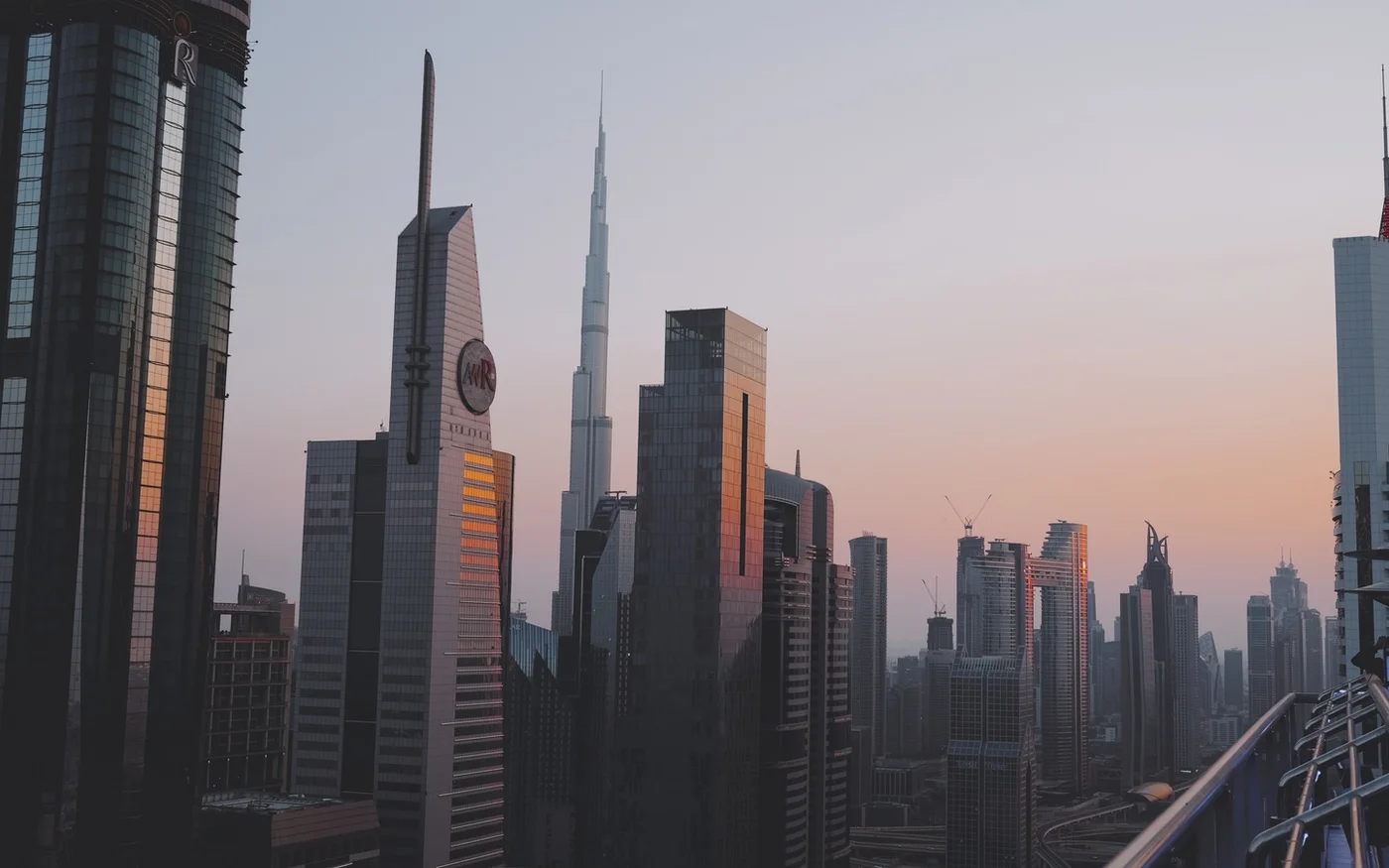
Dubai’s next chapter will be felt in ordinary moments: the walk to a local shop, the connection between a bus stop and a station, a few hours beside the water, or a workday spent closer to home. The Dubai 2040 Urban Master Plan brings those parts of city life into one long-term framework, linking where people live with services, jobs, transport and public space.
For residents, the useful question is how those priorities translate into a neighbourhood and a routine. Some changes already have opening dates. Others are funded projects or planning ambitions that will take years to arrive. Understanding the difference makes the plan more useful, whether you are settling into Dubai or watching a familiar district evolve.
Planning documents and project announcements checked on 5 November 2026. Project stages below refer to the dated evidence described, rather than a claim that every element of the masterplan is complete.
The everyday changes to look for
| Part of daily life | What the planning direction means | A useful question for residents |
|---|---|---|
| Local errands | Bring more services into connected neighbourhoods. | Which things can I reach from my actual building entrance? |
| Travel | Connect walking, cycling and public transport more effectively. | Does the whole journey work, including the first and final stretch? |
| Parks and shared spaces | Give public places a broader role in community life. | What is open, accessible and useful for my routine? |
| The coastline | Expand public beach provision through individual projects. | Which precise beach or phase has opened? |
| City identity | Develop established areas while protecting heritage. | How will the particular place change, and what will be retained? |
These are ways to read the plan in practical terms. They are also useful questions to take on a neighbourhood visit: a transport line on a map and a usable connection outside your door are different pieces of the same journey.
What Dubai 2040 actually is
Launched in 2021, Dubai 2040 is the emirate’s long-term spatial planning framework. Dubai Municipality describes its role as coordinating development through strategies, principles and policy directions that guide more detailed plans. Its goals cover housing and community facilities, parks, accessibility, economic land, environmental quality and the protection of heritage. Read Dubai Municipality’s masterplan overview.
Think of it as the framework connecting decisions that might otherwise appear unrelated. Where housing goes affects the demand for schools and shops. Where jobs cluster affects the journeys people make. A park can be more valuable to a neighbourhood when the surrounding streets make it comfortable to reach.
The framework also has a formal place in Dubai’s planning system. Law No. 16 of 2023 concerning urban planning identifies the Dubai 2040 plan approved on 13 March 2021 as the emirate’s Structure Plan. That gives the headline vision a planning context; it does not turn every illustration associated with Dubai’s future into an approved project.
For a household making a decision now, the citywide direction is useful background. The immediate choice still comes down to the facilities, access and services available in the particular location.
Five major centres, with different roles
The original launch announcement placed emphasis on five major urban centres: Deira and Bur Dubai for the historic city; Downtown and Business Bay as a financial hub; Dubai Marina and JBR for hospitality and leisure; the Expo 2020 centre for exhibitions, tourism and logistics; and Dubai Silicon Oasis for knowledge and innovation. Those names describe the launch framework, including the Expo-era terminology used at the time. See the original 2021 announcement.
For residents, the interesting point is the range of functions. A city built around several centres can offer different combinations of work, services and leisure. Your best base depends on the places you need regularly, rather than on a single idea of being near “the centre”.
A useful exercise is to list a normal week: workplace, school, shopping, exercise and the people you see. Then trace those journeys from a prospective home. A district name is a starting point for that exercise. The entrance, crossing and transport stop are where the everyday experience becomes specific.
The 20-minute city starts with local needs
The second phase of the masterplan, approved in December 2022, included the development of a 20-minute-city policy. The official announcement describes integrated service centres and development around mass-transit stations, with the aim of giving residents access to 80% of their daily needs and destinations within 20 minutes. Walking and cycling are central to that local-access ambition. Read the Phase II announcement.
That is a helpful way to think about the small trips that fill a week. Buying essentials, reaching a community facility or fitting in some outdoor time should be considered alongside the longer journey to work. Each person’s list will differ: a parent collecting a child and someone working from home can have very different local priorities.
The published Structure Plan executive summary also distinguishes local access from wider travel. Its community-facilities section pairs the 20-minute walking or cycling concept with access to higher-order amenities through public transport. The concept therefore needs to be read at the right scale. It is a planning goal for connected daily life, rather than a timetable for every journey across the emirate.
Better connections can begin with a pavement
Walking improvements become tangible through individual streets and projects. On 22 March 2026, RTA announced the award of the first-phase contract for the Historic Al Ras Walkway. The scope includes 12 kilometres of walkways and five kilometres of cycling tracks, alongside work on artistic spaces with Dubai Culture. RTA describes wider pavements, shade, seating, greenery and wayfinding, with connections to Metro, bus and marine transport. Read the Al Ras contract announcement.
This is a contract-award milestone. It should be read as the scope of a project being delivered, rather than an invitation to follow a completed new route.
The details explain why a walking project can matter beyond its total length. Somewhere to pause, clear directions and a comfortable connection can change whether a short trip feels manageable. When assessing your own local area, look at the parts between destinations: the crossing outside the shop, the approach to the bus stop and the final stretch home.
The Blue Line connects the long-term plan to a major transport project
The Metro Blue Line is a larger example of the connection between development and travel. RTA describes a 30-kilometre line with 14 stations, linking with the existing Red and Green lines and serving areas including Dubai Creek Harbour, International City, Mirdif, Dubai Silicon Oasis and Academic City. Its published completion year is 2029. See RTA’s Metro project information.
Construction is distinct from passenger service. RTA’s May 2026 newsletter reports the launch of primary tunnelling works, and its project material continues to describe the line as a development project. A future connection can be relevant to a long-term view of an area, while a commute beginning next week still needs to work with today’s services.
RTA’s official reel about the Blue Line tunnelling machine gives a visual introduction to that construction stage. For a resident comparing locations, the practical next step is to separate present transport access from the improvement expected when the line opens.
Greener spaces need to work as places
The original Dubai 2040 announcement set an ambition to double green and recreational spaces and areas allocated to public parks. The usefulness of that ambition lies partly in what the spaces allow people to do: spend time outside, meet locally and fit recreation into an ordinary day.
On 3 September 2026, Dubai Municipality launched its Greenery and Plantation Manual. The guidance covers the planning, design, delivery and maintenance of parks, corridors and landscaped public spaces. It includes irrigation, water-efficient landscaping, plant choices and responses to different settings, from coastal and urban areas to desert and mountain environments.
That attention to the individual setting matters. A useful community space needs more than an attractive outline on a plan. When visiting one, consider where you would sit, how you would arrive, what would bring you back and how it fits with the rest of the neighbourhood. A place that supports a brief visit on a normal day serves a different purpose from a destination saved for a special outing.
A current example: working from Al Barsha Pond Park
Work From Park at Al Barsha Pond Park opened on 2 November 2026, according to Dubai Municipality. The project combines outdoor working areas accessible to park visitors with climate-controlled indoor facilities, including desks, private offices and meeting rooms. Indoor day access is booked through Letswork; dedicated desks and offices are offered for longer-term use subject to availability. Read the opening announcement and booking arrangements.
It is a specific example of an established public space taking on an additional role. For someone whose work allows it, a local workspace may offer a way to organise part of a day around the neighbourhood. Whether it suits you depends on the job: private calls, meetings and focused individual work call for different facilities.
Choose the actual workspace product before assuming what is included. The outdoor areas and bookable indoor facilities have different arrangements; use the operator’s current listing for prices, availability and amenities. The municipality’s official Work From Park post shows the setting and introduces the concept.
More public coastline, delivered in separate stages
Dubai’s public beach masterplan, approved in May 2023, set a long-term target to increase the length of public beaches from 21 kilometres to 105 kilometres by 2040. Those figures describe the intended expansion across the programme, rather than the shoreline already available today. See the public beach masterplan announcement.
A delivered example is Khor Al Mamzar Beach, whose opening on 5 May 2026 was reported by Emirates News Agency. The first phase includes an expanded swimming shoreline, a designated night beach and walking, running and cycling facilities. Read the opening report.
The place name and phase matter. In a September 2026 update, Dubai Municipality distinguished the opened Al Khor phase from Al Mamzar Corniche, which it described as preparing to open. That distinction is worth retaining when planning a visit: neighbouring phases can have different facilities and opening stages. See the municipality’s public-destinations update.
Dubai Municipality’s April 2026 Al Mamzar development reel provides earlier project context. For a beach day now, check the precise destination and current access arrangements rather than treating a development preview as a guide to everything open.
Heritage remains part of the future city
Dubai Municipality includes the protection of heritage, archaeology and culturally significant places among the masterplan’s primary goals. The planning direction is therefore relevant to the established city as well as new districts. The official executive summary also sets out a separate approach for Hatta, reflecting its rural setting and natural and cultural assets.
For readers, that means paying attention to the character of an individual place. A historic district, a coastal neighbourhood and a mountain community need different kinds of development. A welcoming route through an older area can improve access while retaining the reasons people value it in the first place.
It also gives a useful perspective on change close to home. Ask what a project adds to the surrounding area, how it connects with existing uses and which qualities are being preserved. A new facility becomes more interesting when you can understand its relationship with the place around it.
How to use the plan when choosing a neighbourhood
Start with the life you lead now. Write down the journeys you repeat and the services you depend on, then give them a sensible order of importance. A regular school run may matter more than occasional access to a major attraction. Someone working remotely may value a nearby place for quiet work more than proximity to an office district.
Next, test the connections. Begin at the entrance you would use, rather than at the middle of a neighbourhood on a map. Consider the route in both directions and at the times you expect to travel. Where a journey involves several modes, assess the transfer as well as each separate ride.
Then make a simple distinction between available now and planned improvement. Give a currently useful facility weight in today’s decision. Keep a future project in a separate part of the comparison, with its confirmed stage and timeline. This makes room for optimism while keeping the immediate choice grounded.
Finally, leave space for the details that make a neighbourhood feel comfortable to you. A familiar shop, a pleasant place to pause or a routine you can complete locally can carry more everyday value than a long list of distant facilities. Dubai 2040 provides a wider framework for those connections; your own week is the best place to start assessing them.
Questions residents often ask
Does Dubai 2040 mean every journey will take 20 minutes?
The 20-minute-city ambition concerns access to everyday needs through more connected local areas. The planning documents also consider wider public-transport journeys. It is a long-term planning direction, rather than a present travel-time guarantee.
Is the Blue Line available for travel now?
It is a construction project with a published completion year of 2029. Plan current trips using operating routes and their current schedules.
How can I tell whether a new public space is ready to use?
Look for an opening announcement for the exact place and phase, then check current access information. A project approval, contract award and public opening describe different stages.
Last reviewed: 5 November 2026. Review project stages and access arrangements again before publication or a visit.



Comments (0)
No comments yet. Be the first!