

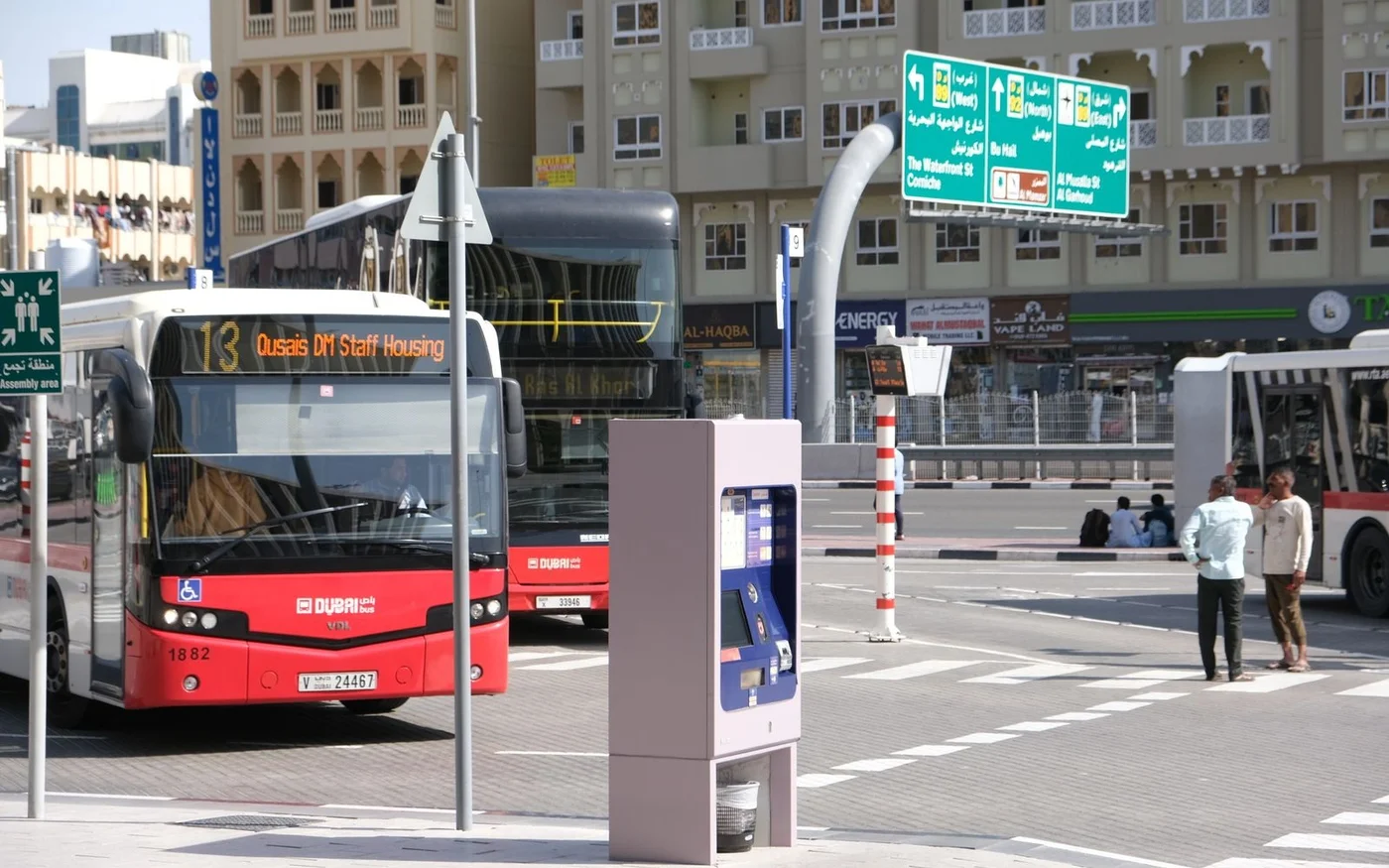
Two bus stops can appear to offer the same trip in S’hail. One might leave you waiting by the roadside for a single service. The other might have a shaded waiting area and several route numbers on the sign, with only one of those buses going where you need. The difference matters when you are picking a stop for a daily commute, planning a midday transfer or checking whether someone using a wheelchair can make the whole journey.
Dubai’s Roads and Transport Authority announced on 12 April 2026 that it had completed a project installing 726 shelters across the emirate. In May it described a summer inspection programme covering a network of 895 air-conditioned shelters at 621 locations. Those figures measure different things. Here is how to use the published information when comparing actual stops, and where to look for the departure and fare for the trip you want to make. RTA’s April completion notice. RTA’s May inspection notice.
What was delivered in April
The 726 figure is the completed project total published in April. RTA’s project page places the end date in the second quarter of 2026. An earlier announcement had put the programme target at 762 and reported that 595 shelters had already been completed. The later completion notice gives 726. The published notices do not reconcile the figures, so 726 is the appropriate number to use for the announced completion. RTA project record. Earlier RTA progress report.
RTA says some of the installed shelters serve more than ten routes. Its April notice describes seven shelter models grouped by use, ranging from main stops serving more than 750 passengers a day to pickup and drop-off stops serving fewer than 100. At main stops, RTA describes a cooled section alongside outdoor shade. The project also includes passenger displays with route maps, timetable and frequency information. The same release describes wheelchair spaces in the shelter design under the Dubai Universal Design Code.
On a map, a bus stop is usually a small symbol. On the ground, there might be several places to wait along the same road. The indoor area at a major stop and the boarding point can be separate. If you wait indoors, find the sign or bay for your bus before the departure time and allow time to get from the door to the boarding point. A district name alone can also cover stops on opposite sides of a busy road. Look for the full stop name and direction in your itinerary, especially if your return stop is across the street.
What the summer cooling campaign covered
RTA’s 6 May notice puts 895 air-conditioned shelters at 621 locations in the network covered by its summer readiness campaign. RTA describes field checks, preventive maintenance and corrective work when faults are found. The count covers the air-conditioned shelter network described in that announcement. It should not be added to the April project count, and the release gives no live cooling status for individual stops.
For a trip where a cooled place to wait matters, check the waiting area at the actual boarding stop. If you are trying a route for the first time, give yourself enough time to identify the shelter entrance and the bay in daylight. For a recurring commute, check the return stop as well. A covered wait on the morning side of the road tells you little about the afternoon side. At a transfer, account for the walk between the arrival point and the next bus before relying on the time you expect to spend under cover.
RTA names Madinati in the RTA app as a way to report issues with air-conditioned shelters. For a cooling or door fault, use the stop number if you can see it. Add the street side, time and a short description so a maintenance team can distinguish between two shelters near the same junction. A problem with a display and a problem with the air conditioning can affect the same journey in different ways. While waiting, use the stop number to look up your bus separately if the display is blank or hard to read.
How to check frequency at your stop
Start with the stop and the direction you need. Then look up the next two or three departures that would actually complete your trip. RTA lists its website, S’hail and a text message lookup for local bus departures. Its instructions allow you to text D followed by a space and the bus stop number to 5223. A route map shows where the bus goes. The departures for the stop show how much waiting your trip is likely to involve. RTA local bus instructions. RTA timetable.
Imagine you have two possible stops for the same appointment. At the first, the walk takes four minutes and the next usable departure is in twenty. At the second, the walk takes eight minutes and a usable bus leaves in twelve. In this example you could leave for the second stop and board sooner, provided you can comfortably make the walk and get to the correct bay. If you miss that departure, the first stop might become the better choice. Compare the departures after your expected arrival at each stop, rather than counting all the routes on each sign.
One practical check is to repeat the search at your real travel times for both directions. A route that works at 8 a.m. on the way to work could leave you waiting longer at 7 p.m. on the way home. If a journey includes a transfer, look at the gap between the first scheduled arrival and the second boarding time. Then check how long the walk between stops will take, including any crossing. A more frequent first bus can still leave you with the same long wait for the second one.
RTA held a passenger dialogue at Al Ghubaiba Bus Station on 8 October. Riders asked for more trips on selected busy routes and more air-conditioned shelters. The account records feedback. For evidence of an actual change, use an operator notice that names the route or stop and gives an effective date, then check the timetable for the day you plan to travel. RTA’s October passenger dialogue.
Check accessibility from the pavement to the bus
The wheelchair space in a shelter is one part of a continuous journey. RTA’s public bus pages describe wheelchair space on board and low-floor design on its newer buses. A trip also depends on the path from your building, the kerb at the boarding point and the route from the destination stop. Check the whole sequence if you need a step-free route, especially when the journey planner puts a transfer across the road or through a station. Dubai Bus passenger facilities. RTA accessibility information.
Start with the entrance you can use at each end. When comparing two stops, look at the crossing and the approach to the boarding area as well as the distance. If the timetable calls for a change at a bus station, identify the arrival bay and the departure bay. Ask RTA about the specific stop, direction and service where you need confirmation about boarding. Give the same details for the return leg if it uses a different stop. An accessible route on one side of a main road does little for the journey home if the stop on the other side is difficult to reach.
Keep the waiting area’s designated space clear and leave room near the boarding point for other riders to move. If you are meeting someone at a hub, give them a landmark inside the station or the bay number. This is especially useful where routes to similar destinations leave from different parts of the station. A sheltered meeting point can be useful while you wait together, as long as both of you know when to move to the bay.
Three common stop choices
| Your choice | Check before relying on it | How to compare |
|---|---|---|
| A roadside stop near home | Street side, shelter and usable departures | Count the walk and wait at the hour you actually leave. |
| A busier stop a little farther away | Whether more than one route serves your destination | Compare the earliest two departures that work for the whole journey. |
| A rail or bus station interchange | Distance from arrival to the departure bay and the last viable connection | Allow for the crossing or station walk before choosing a tight connection. |
If you travel at irregular times, the comparison may come out differently on different days. Someone starting a shift in the morning can use a regular departure and still need another route home late in the evening. Save a second itinerary for the days the first departure does not line up with the shift. Use the last departure from the stop you actually need if a timetable lists the route’s start time at the terminal. The bus may pass your stop later than the time it leaves the terminal.
Where two routes are options, check what each one does at the far end. A faster bus that stops on the other side of a large junction can involve more walking than a slower service that drops you near the entrance. That final walk also matters if you have luggage, are travelling with children or need a step-free crossing. If the return journey starts in a different place, compare it separately before settling on a stop for both legs.
Check the fare and how you will pay before leaving
For local bus trips, RTA applies its Dubai zone fare system. The amount depends on the zones covered and whether any connection qualifies as a transfer. A shelter project announcement gives no information about a passenger’s fare. Compare the entire route including any rail leg and confirm the current fare conditions before relying on the cost of an alternative. RTA lists a bus ticket or nol card for local bus travel. If you plan to top up before boarding, check the stop or station facilities, or prepare your card in advance. RTA nol fares and transfer rules.
RTA’s Silver nol table lists AED 3 for one zone, AED 5 for two adjacent zones and AED 7.50 for more than two zones. Its Metro-to-bus example allows up to 30 minutes between checking out of the Metro and checking in on the bus for a qualifying transfer. RTA also lists limits of three transfers and 180 minutes for the overall journey. If you stop for an errand between rides or leave a longer gap to catch a later bus, check what that does to the fare before comparing two journeys by price.
For a regular commute, try saving a short note with the outward and return stop names, which side of the road they are on, the usual bay where applicable and the next departure after your preferred bus. Add where you can wait and how far that is from the boarding area. If a new shelter makes the wait easier, the best way to tell whether the trip has improved is to compare the walk, wait and onward connection at the times you actually travel. One stop may work well on the way out and another on the way back. Sources checked 6 November 2026.

Comments (0)
No comments yet. Be the first!