

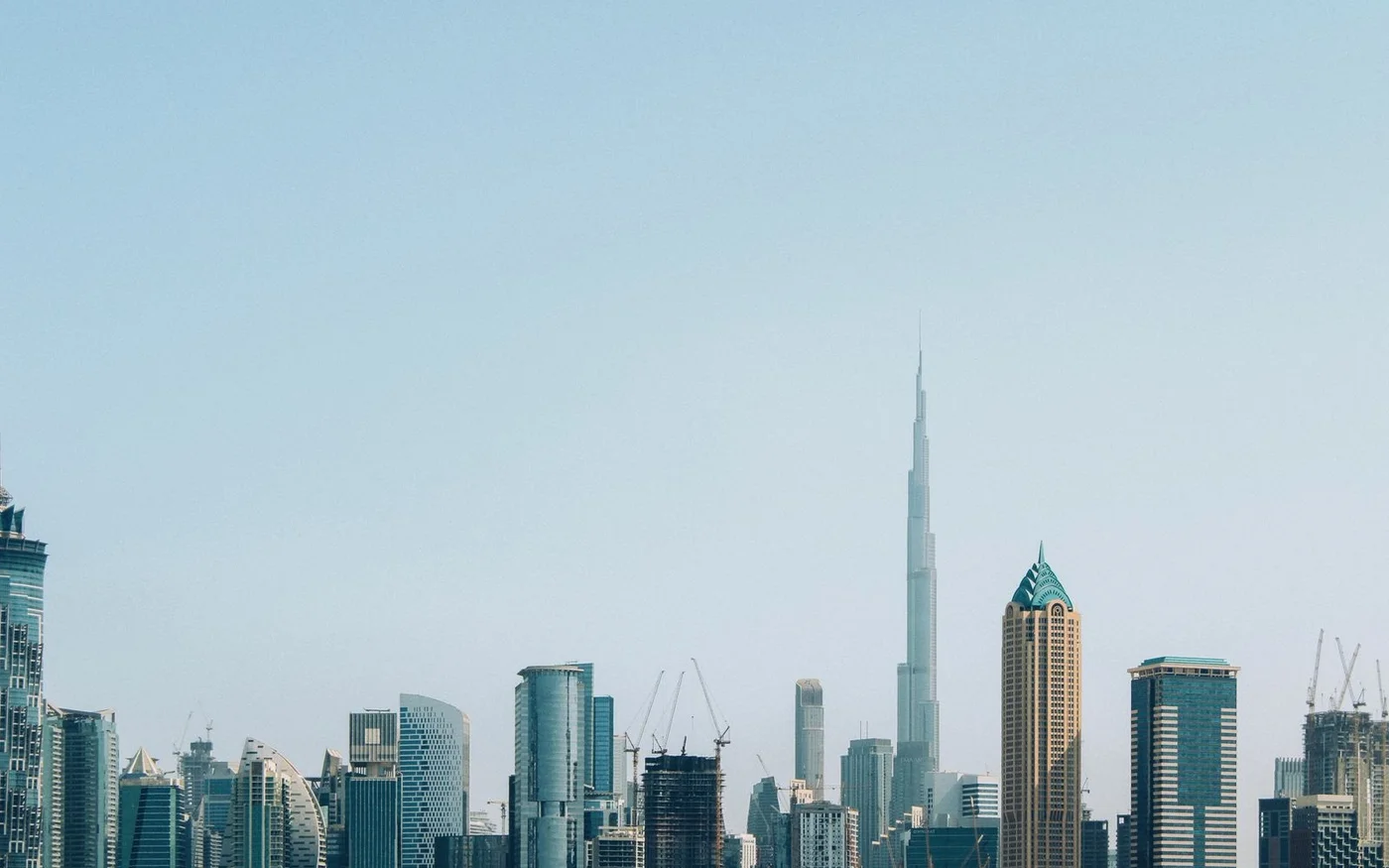
A future airport, a redesigned historic walking district and a newly opened waterfront all belong to Dubai’s development story. They are also at very different stages. One is a long construction programme, another has reached a contract award, and part of the third is already welcoming visitors. Understanding that difference makes a city-project update useful for everyday decisions.
This dated tracker looks at three major programmes through their confirmed milestones: the Al Maktoum International Airport expansion, Dubai Walk in Historic Al Ras, and the Al Mamzar Beaches redevelopment. It records what the available official evidence establishes, what remains a future commitment and what residents can sensibly act on now. Sources were checked on 5 November 2026; each entry retains the date of the milestone rather than presenting every announcement as new today.
The projects show change at three scales. Airport construction concerns the city’s long-term capacity and connections. Walking infrastructure concerns how a district fits together at street level. Beach redevelopment concerns a public place people can use during an ordinary week. Those differences matter more to a resident than placing every scheme in one list of “coming soon” destinations.
The current position at a glance
| Project or phase | Confirmed milestone | Practical reading |
|---|---|---|
| Al Maktoum airport expansion | June 2026 construction update; August 2026 people-mover contract | Major development in progress; 2032 remains a target for the new first phase |
| Historic Al Ras walkway | RTA contract award, 22 March 2026 | Defined delivery scope; the award is not an opening notice |
| Khor Al Mamzar Beach | Public opening announced, 5 May 2026 | First beach phase opened, with specified new facilities |
| Al Mamzar Corniche | Municipality described preparations for opening, 14 September 2026 | Keep separate from the opened Khor phase; no later opening confirmation established here |
The table is a record of supported stages. A future target remains a target until a delivery or opening notice establishes the next step. Equally, a confirmed opening should be recognised as a real change, with its exact phase and location attached. That avoids understating work already delivered while overstating the availability of neighbouring facilities.
Al Maktoum International Airport: construction and systems contracts
The official 15 June 2026 development update described the airport expansion as having entered large-scale construction. It reported packages exceeding AED 13 billion under execution, progress on enabling works, runway infrastructure and terminal foundations, and a first-phase operating target of 2032. Preparations for further packages exceeding AED 55 billion were described as the next stage, with awards intended by year-end.
That distinction between work under execution and work awaiting award is important. The June figures describe a dated position; they should not be added together and presented as contracts already completed. Nor does progress on a runway or a foundation mean the terminal above it is ready for travellers. Each element advances the programme, but each has a different role in making an airport operational.
Dubai Aviation Engineering Projects identifies its role as the design, master-planning, infrastructure-development and construction body for Dubai’s aviation sector. Keep that delivery role distinct from a passenger’s immediate service enquiry: a construction announcement and the operating information for a booked flight answer different questions.
A later milestone: moving passengers around the future airport
A more recent project-specific confirmation comes from Mitsubishi Heavy Industries’ 20 August 2026 announcement. It says a consortium received the automated people-mover order for the first phase from Dubai Aviation City Corporation. The stated system covers approximately 50 kilometres and nine stations, with 165 vehicles and signalling among its core components. Completion is scheduled for December 2031, ahead of the airport development’s 2032 target opening.
The people mover helps explain what airport construction involves beyond a terminal exterior. A large airport needs passengers to reach the appropriate facilities within it. Vehicles, controls, stations and the surrounding buildings must work together. A systems contract is therefore a meaningful delivery milestone, even though it offers no new public journey to book today.
For someone reading a headline about the new airport, the useful question is which part of that sequence has advanced. An order confirms a supplier commitment and scope. Construction confirms physical work. Testing and an eventual operating announcement would establish later stages. Treating those as distinct gives a clearer picture of progress than repeatedly describing the whole development by its eventual size.
What this changes for a resident now
For an upcoming flight, use the airport and terminal on the airline’s booking and current travel instructions. A future opening target is not an instruction to change the destination of your airport transfer. The expansion story concerns the new development programme; it does not replace the information attached to an individual flight.
If the project matters to a work or location decision, separate the time horizons. Your current commute, existing transport access and an employer’s confirmed workplace belong in today’s calculation. The airport’s future capacity belongs in a longer-term assessment. The fact that a major programme is advancing does not by itself establish the timing or value of every proposed business opportunity around it.
The next updates worth watching are identifiable delivery steps: a specific package award, a construction milestone, system installation or testing, and finally the arrangements for entering service. Keep those dates alongside the 2032 target. They will show how the programme is developing without requiring a resident to turn a construction forecast into a present-day travel assumption.
For historical operating context, the official-site-linked @dwcairport account coauthored a 29 April 2025 cargo announcement with Dubai Airports. The inspected image shows an aircraft and a welcome ceremony. It illustrates existing DWC activity, rather than the delivery of the future terminal; its flight-frequency claim is not presented here as a current timetable.
Dubai Walk in Al Ras: a contract with a recognisable street-level purpose
On 22 March 2026, RTA announced the contract award for Phase I of Dubai Walk in Historic Al Ras. Its stated scope includes 12 kilometres of walkways, five kilometres of cycling tracks and the rehabilitation of ten artistic spaces. The planned connections include eleven Metro, bus and marine-transport stations. Wider pavements, shade, seating, greenery and heritage-sensitive wayfinding are part of the described improvements.
This makes Al Ras a useful project to follow at a human scale. A route can connect important destinations on a map while still needing more comfortable pavements, clearer directions or better links to a transport stop. Those are the kinds of changes the contract describes. Their value will become tangible through the actual sections delivered and how they connect to the district around them.
The milestone supported here is an awarded contract. It should not be rewritten as a completed twelve-kilometre walking route. The source describes what is to be delivered; it does not provide a public opening notice for every component. Residents planning a journey should continue to use the available streets and current access information, rather than assume a future route is already continuous.
How to read the wider walking-network ambition
The March release places Al Ras within the longer Dubai Walk programme, with a first implementation phase spanning 2025–2027 and later phases extending towards 2040. It describes a citywide ambition covering more than 6,000 kilometres of developed and enhanced walkways. Those figures belong to the wider programme, while the Al Ras contract has its own much smaller, specific scope.
For readers, the local scope is the more practical starting point. Which transport connection is being improved? Where will shade and seating be placed? Which section has opened? Those questions translate a master plan into a route that can be evaluated. They also help prevent a citywide target from being mistaken for a promise that every neighbourhood will receive the same facilities at the same time.
There is a design balance to follow here too. The announcement places walking improvements alongside preservation of the historic area’s character and the addition of public art. The eventual experience will depend on how these elements fit together: movement, places to pause and an intelligible connection to the district’s heritage. That is a more useful lens than looking only at the total length of paving.
What to check before building a walk around the project
Look for a dated opening or access update for the section you want to use. Check the walking connection from your transport stop to your actual destination, particularly when travelling with a pushchair, mobility aid or bicycle. A planned network link is a reason to watch for an improvement; current route information establishes what is available for the journey.
For a business in the area, the same distinction keeps expectations realistic. The programme’s stated transport links and public-space improvements may be relevant to future access, but the contract award alone does not prove a change in customer numbers. A business decision should use its own current trading information alongside the delivery updates that affect its street.
The clearest next milestone would be confirmation of completed sections and their opening arrangements. Until then, Al Ras belongs in the contracted-project category. It is a substantial step beyond a general vision, with a defined local purpose, while still requiring delivery evidence before the full planned benefit can be described as available.
RTA’s official @rta_dubai account published the 22 March Al Ras announcement. Its caption confirms the contract award, and the inspected video frame shows a map-style project visual. Read it as the presentation of a planned improvement, rather than evidence that the complete route has opened.
Al Mamzar Beaches: the first phase is open, the Corniche needs its own confirmation
The 5 May 2026 opening announcement confirms that Khor Al Mamzar Beach opened to the public as the first phase of the Al Mamzar Beaches redevelopment. Reported features include a 3.6-kilometre swimming shoreline, a designated 300-metre night beach operating 24/7, a floating walkway and more than 5.5 kilometres of running, walking and cycling tracks. The announcement also identifies accessibility provision for People of Determination.
Here the change is different from the airport and Al Ras: the source describes an opened public destination. Residents can consider a visit to the Khor phase, with the normal need to check local signs, access and the operating conditions of individual facilities. The night-beach provision applies to the designated stretch; it should not be extended into a claim that every part of the waterfront is an unrestricted night-swimming area.
The combination of shoreline and movement tracks also explains why the redevelopment matters beyond a single attraction. It gives people several ways to use a public place: walking, cycling, exercise or spending time by the water. This tracker is concerned with that civic change and its delivery stage, rather than ranking beaches or prescribing a day-out itinerary.
Why the phase name matters
Dubai Municipality’s 14 September 2026 portfolio update confirms use of the opened Al Khor phase, reporting more than 1.75 million visitors since May. In the same update, it describes Al Mamzar Corniche as being prepared for opening, including a planned ladies-only night beach. The two descriptions should remain separate.
A broad headline saying “Al Mamzar opens” can obscure this difference. Khor Al Mamzar’s opening does not establish that every facility described for the Corniche is operating. For a visit centred on a particular amenity, find the current confirmation for that amenity and phase. If the only evidence is a plan or a preparation update, retain that status rather than inferring availability from activity elsewhere in the development.
No later official Corniche opening confirmation was established in this review. That is a limit of the verified record here, rather than a claim that nothing has happened on the site since September. A later owner notice could change the entry. It should identify what has opened and its access arrangements before the planned facilities are presented as usable.
Place the opening within the wider public-space programme
The Municipality’s 18 October 2026 delivery report says its Public Facilities Agency completed more than 107 projects with a combined value of AED 1.6 billion during 2026. It includes beaches, parks, neighbourhood improvements and community facilities within that portfolio. This provides context for the scale of public-space work, but it is not a replacement for a project-specific opening notice.
That distinction protects the reader from another easy assumption: a completed-project total does not automatically mean every named destination’s wider redevelopment is finished. Use the individual Khor opening for the opened phase and the separate Corniche update for the future phase. The aggregate report describes a programme of delivery; the specific notice tells you which place has changed.
The official @dubaimunicipality account also published a 5 May beach campaign. The inspected frame uses oversized beach equipment in a CGI street scene. It is promotional imagery for the reopening, not a literal view of installed facilities; the opening and amenity details above come from the dated public announcement.
Use milestones according to the decision you are making
For a visit this week, an opening notice and current access information matter most. For a journey through an area being improved, look for completed sections and temporary route information. For an assessment of the city’s longer-term development, contract awards and construction updates are meaningful evidence, provided their dates and scope remain visible.
The three programmes illustrate why a useful tracker needs several status labels. The airport has physical works and a later systems order, with future operating targets. Al Ras has an awarded local walking-infrastructure contract. Khor Al Mamzar has an opening and subsequent visitor evidence, while the Corniche phase still needs its own verified opening update in this record.
Keep the project, phase, date and available action together when reading the next announcement. That simple habit turns Dubai’s development headlines into information you can use: a public place to visit now, an improvement to follow locally or a major construction programme to watch over the years ahead.



Comments (0)
No comments yet. Be the first!