

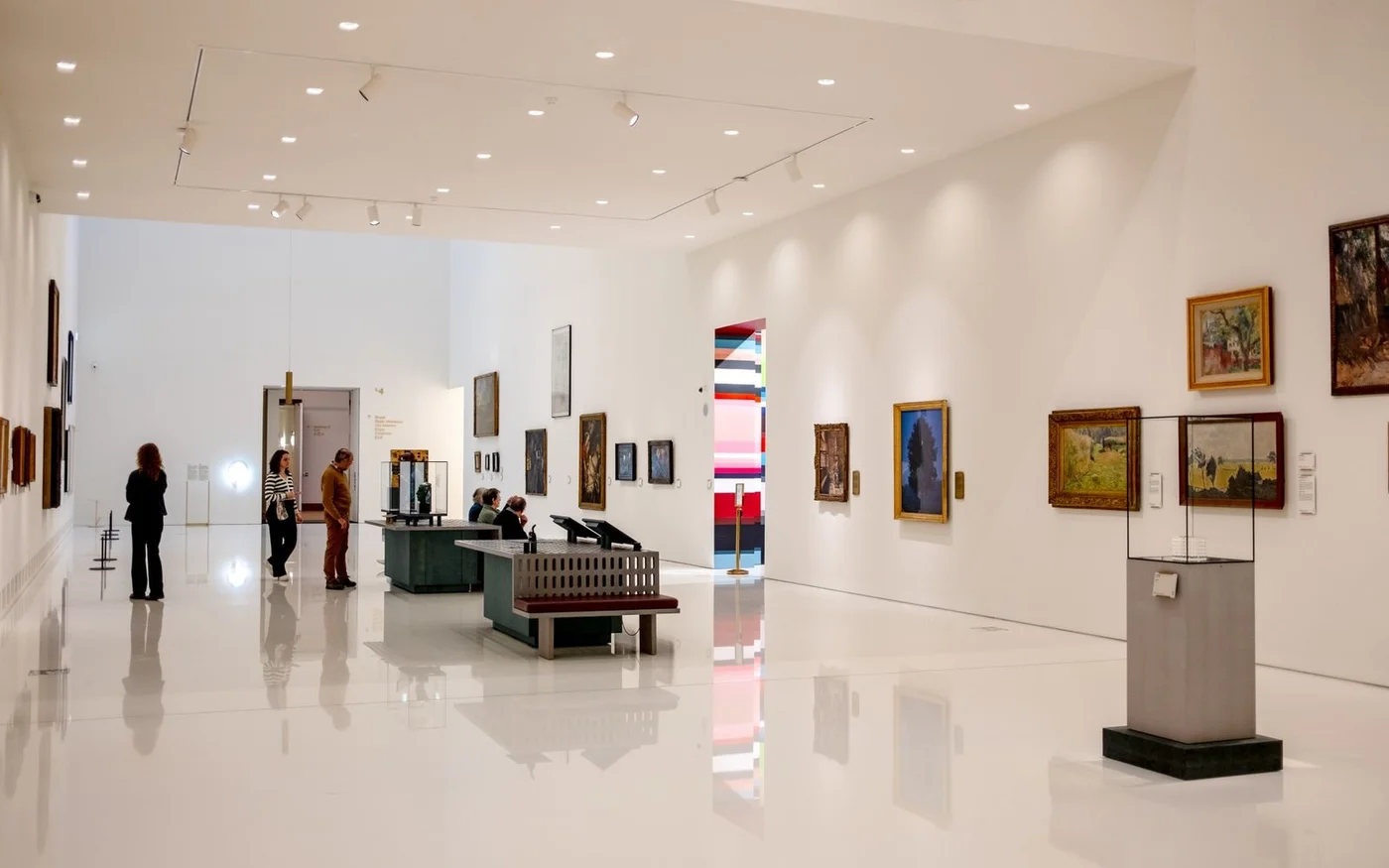
A gallery’s opening show tells you something about how it wants you to look. A group exhibition can bring together artists whose work takes very different forms. A solo show gives you the chance to see one person return to the same ideas across several works. The opening matters even after the exhibition has come down, because it helps explain the kind of programme you might find when you visit next. In Dubai, that distinction matters at both the new d3 premises of Gary Tatintsian Gallery and the newer gallery spaces at Alserkal Avenue.
Gary Tatintsian Gallery opens new premises in Dubai Design District
Gary Tatintsian Gallery’s new space in Building 3, Dubai Design District, opened in 2026. The gallery had been presenting work in Dubai since 2022, so the opening marked a change of premises and a new chapter for its local programme. Its inaugural group exhibition presented the gallery’s international contemporary art focus. It gives a visitor a different way into the programme from a show built around one artist. The connections come from seeing what the gallery puts in the same room and how one work changes the way you look at the next. Gallery history and Dubai opening · Inaugural exhibition
The inaugural checklist puts three very different surfaces in play. Evgeny Chubarov’s untitled oil paintings from 1994 and 1995 are each three metres high. Mat Collishaw’s Alluvion V is a Jacquard tapestry, where the image is woven into the work. Wim Delvoye’s Möbius Dual Corpus Direct Current is made in polished bronze. The size of the Chubarov paintings invites you to take them in from farther back before looking more closely. A bronze work occupies space differently, and its finish gives you a reason to see how it looks from another position if the room allows. The gallery’s exhibition index still lists the group show as current. Confirm the installation and the dates directly, since published listings disagree about the closing date. Inaugural checklist and media · Gallery’s current exhibition index
The gallery’s general contact page and exhibition page publish different visiting hours. Both point to Building 3 and give dubai@tatintsian.com. Email to confirm the opening time and what is installed if you are planning the trip around a particular work. The inaugural exhibition is a useful reference for the space, and the gallery can confirm which works you can actually see on the day. Dubai gallery contact and address
Taymour Grahne Projects opens with Gail Spaien at Alserkal Avenue
Taymour Grahne Projects opened its Dubai project space with Gail Spaien’s Arranging Flowers in September 2025. In the gallery’s archive, acrylic paintings on linen take an ordinary domestic arrangement and make the view through it feel unsettled. In Waypoints, potted flowers and a stone wall sit in front of an ocean and blue moon. In Habitat, the round table tilts toward the viewer, so the patterned cloth and the vessels on top are almost as visible as they would be from directly above. The opening gave visitors time to see how the artist repeats the relationship between a room and the outside world across more than one canvas. Inaugural show and illustrated work list
The 2025 paintings are a way to understand the space’s debut. The autumn 2026 programme gives a different reason to visit. Katia Kameli’s The Canticle of the Birds brings ceramic sound sculptures into the gallery. Its published list includes Vulture, Simurgh, Owl and Heron. Start by looking at the material and scale of two works. The gallery’s checklist shows Simurgh on a much larger scale than Owl, even before you consider how the sound changes the way you spend time with them. The gallery gives 10 November as the closing date, while an Alserkal listing gives 11 November. Confirm directly if you are planning a visit near the end. Gallery exhibition details and works · Alserkal exhibition calendar
Find the gallery at Warehouse 31A, Lane 4, Alserkal Avenue. It publishes 11am–7pm Monday to Saturday and gives info@taymourgrahne.com for enquiries. Alserkal separately lists Flawed Images, a two-person exhibition by Daniele Genadry and Fayçal Baghriche, for 16 November–12 December 2026. If you are going between those shows, check whether the gallery is open during installation. The space can keep the same address and regular hours while the works on the walls change. Gallery programme and access · Alserkal’s next exhibition listing
The A/P Room brings collectible design into Warehouse 81
The A/P Room opened its permanent Alserkal Avenue gallery with At First Sight in February 2026. Christelle Bassila leads the programme under Atelio. Its first exhibition used sculptural and material-led works to put design in conversation with art and architecture. That is a distinct kind of gallery opening. The objects can have familiar uses, but the display asks you to consider how they are made, what their forms do and how one period of design looks beside another. The operator’s archive dates the launch exhibition from 11 February to 29 March 2026. The A/P Room’s exhibition archive and gallery information · Atelio’s opening announcement
The gallery’s catalogue gives a sense of how those comparisons work. It lists Afra and Tobia Scarpa’s 1975 Africa Chair in wood, curved plywood and cognac leather, and Faye Toogood’s 2022 Plot II Sculptural Low Table in hand-carved oak. With the chair, you can look at how the curved material and leather meet. With the table, the wood itself carries the shape. These are catalogue examples that explain the gallery’s range. Ask if there is a particular work you want to see in person. Gallery catalogue, materials and works
The permanent space is at Warehouse 81, Alserkal Avenue. The operator identifies the address and offers a contact route, but the checked listing does not give regular gallery hours. Ask what is on view and whether you should arrange a time before setting out. Warehouse 81 and Taymour Grahne’s Warehouse 31A are separate stops. You can put them on the same Alserkal visit if the gallery times align. The A/P Room visitor enquiries
Start with the kind of work you want to spend time with
In d3, the opening checklist is useful if you want to compare media in the same visit. A woven image, a large canvas and a polished sculpture each reward a different distance. Let the work set that distance. Stand back far enough to see how the Chubarov paintings are proportioned, then look at where the marks cluster or spread out. With tapestry, look at how its texture changes as the image comes into focus. If a sculpture is installed with room to move around it, see whether the details that first caught your attention are still visible from the other side. Ask the gallery which of the works from the checklist are in the space before planning around them. Tatintsian’s exhibited works
At Taymour Grahne Projects, the 2025 and 2026 programmes show two ways a solo exhibition can work. Spaien’s opening show gave viewers repeated views of tables, vases and landscapes. The differences became clearer with each painting. Kameli’s bird sculptures repeat a subject across forms and scales, with sound as another part of the experience. If the autumn exhibition is your reason to visit, ask how the sound works are presented on the day. The gallery’s work list will still help you identify the sculptures even if you start by hearing them before reading the labels. Spaien’s opening exhibition · Kameli’s exhibition
At The A/P Room, use the catalogue to look for objects you might otherwise pass without a second glance. A chair offers a recognisable shape, and the label can tell you when it was made, who designed it and which materials are structural. The gallery also lists edition information for some contemporary works. An edition number helps identify the particular example the gallery is describing. If you are going because a particular piece caught your eye, give the operator the designer and full title in your enquiry. A gallery catalogue can include work away from the public display. The A/P Room catalogue and contact form
Check what is on view before planning around an opening show
Read the gallery’s current programme and its address together. Gary Tatintsian Gallery’s archive includes previous Dubai presentations, so search for Building 3 when making plans around its d3 opening. At Alserkal Avenue, Warehouse 31A and Warehouse 81 identify two different galleries. The host calendar can help with a first pass at dates. When it differs from a gallery’s own exhibition page, ask the gallery to confirm the day you want. A changeover between exhibitions may affect what you can see, even when the regular opening hours stay on the website. Tatintsian’s current Dubai address · Alserkal’s exhibition calendar
Plan the two districts as separate stops
For Dubai Design District, use Building 3 as the destination and ask the gallery for the entrance if you are unfamiliar with the area. The district’s contact page identifies the Dubai Mall metro station as the nearest and lists the D03 public bus. That gives you a way to plan the connection without assuming the train stops at the gallery. The same page also describes public parking and taxi access. If you are visiting around a design event, check the gallery’s own confirmation against the district timetable. A district can be busy well into the evening while an individual gallery closes in the afternoon. Dubai Design District visitor transport
For Alserkal Avenue, the host gives three entrances in Al Quoz 1 and a connection on bus 110 from the nearby Metro station. Its guide still calls that station Onpassive; RTA has announced the new name Garmin. It directs drivers to parking near the Avenue and says parking is restricted inside. Follow the signs at the space you use. If you are combining the two galleries, check Warehouse 81 before deciding which order to visit. Taymour Grahne publishes a regular Monday to Saturday schedule, while The A/P Room’s checked site leaves visit arrangements to the contact route. An hour when both galleries are open is more useful than a loose plan to arrive while the Avenue itself is open. Alserkal directions and parking · Avenue hours and individual venue schedules RTA’s Garmin renaming notice gives a September–November 2026 transition for signs, apps and announcements.
If someone in your group needs a step-free route or somewhere to sit, ask the gallery about the entrance and exhibition layout. Building numbers and warehouse numbers are useful for navigation, but they tell you little about thresholds, room layouts or where a vehicle can stop. For a sound exhibition, ask whether the works run continuously or have a particular listening setup. Give the gallery the date you are considering, so it can answer for the display you will encounter. Those practical questions are more specific than asking whether a district is generally accessible.
Use the archive to prepare for the visit
The three spaces publish different kinds of material. Tatintsian gives titles, materials and measurements. Taymour Grahne publishes a work list and exhibition text. The A/P Room gives materials and, for some objects, details about editions and production. Pick a single work from each site and read the entry before you go. At d3, you might start with the height of a painting, then see how much wall it actually occupies. For the Kameli show, you can compare the dimensions of two ceramic works and pay attention to where the sound seems to come from. In Warehouse 81, a material or production date can help you distinguish a historical object from a contemporary piece with a similar outline. Tatintsian’s checklist · Kameli works and media · The A/P Room catalogue
When an inaugural exhibition has closed, use it to ask a better question about the next show. At Taymour Grahne Projects, the opening gave a full room to one painter’s practice, while the announced November exhibition will bring two artists into the same presentation. At The A/P Room, the February debut established collectible design as the focus. A current visit might involve a different group of pieces, but you can still look for the relationship between their form and use. At Tatintsian, the group format offers several points of entry, so ask about a specific artist if that is what drew you to the gallery.
A public exhibition listing gives you a date and a place to begin. A gallery enquiry can answer whether a work is on display, whether an opening event needs registration or whether a visit is possible while a show is being installed. If you want to buy a work, use its full title and year when you contact the gallery. Works with similar names, or two pieces from the same edition, can be easy to confuse. If the visit is simply to look, the exhibition page and a confirmed time are enough. Give yourself time to stay with one work before moving to the next room.
Keep the title of the work with the exhibition name
If a work stays with you, note its title, artist and medium before you leave. At Tatintsian, that matters for the two Chubarov canvases, both called Untitled. The year distinguishes the 1994 painting from the 1995 painting in the gallery’s list. With a sculptural design object, record the production date or edition if the label gives it. If photography is allowed, a photo of the label is often more useful later than a photo of the room alone. You can return to the gallery’s archive and find the work in the context of the show, even after it has moved. Tatintsian’s title and date listings · The A/P Room edition records
Before leaving an exhibition with several media, pick one comparison you want to remember. At the d3 show, that might be how a painting’s scale changes the distance from which you read it, compared with the way a tapestry draws your attention to its surface. At Alserkal, you might remember how long you spent listening to one ceramic work or looking at how a chair’s parts fit together. That gives you a way back into the exhibition when you look up the work later.
Comments (0)
No comments yet. Be the first!