

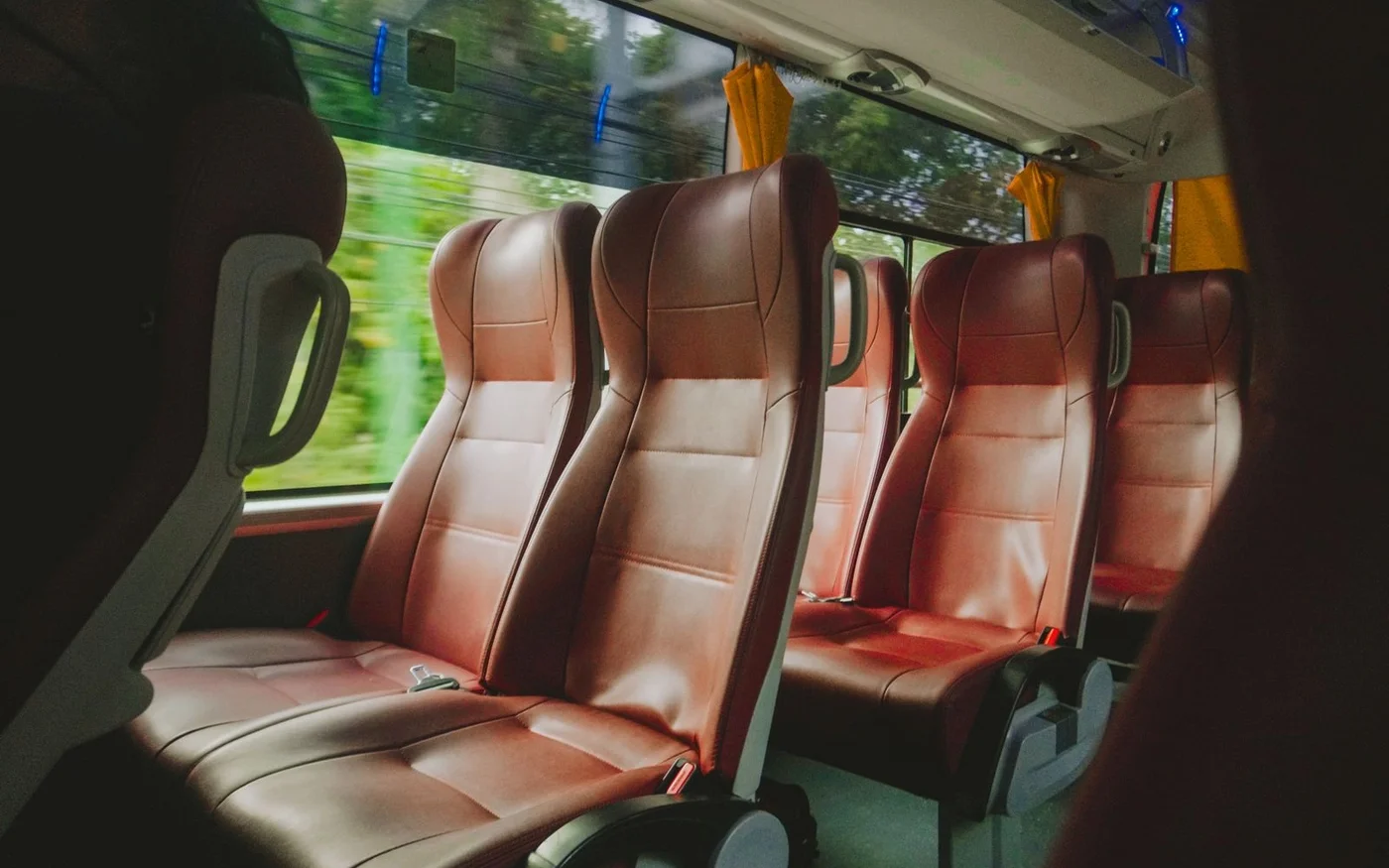
A school bus can serve your neighbourhood and still leave you with a surprisingly early start, a stop on the far side of a main road or an afternoon run that leaves before your child’s club finishes. The useful comparison starts with a specific campus, a specific address and two separate trips. Ask the school or operator to show you the morning pickup and afternoon drop-off before you decide how the bus fits your week.
Get the stop pin, time window and first available travel date in writing. An area on a coverage map is a reason to enquire. An allocation is what you can use to arrange work, a second school run or the adult who will meet the bus. If you are choosing a new home, give the transport coordinator the building or villa address you are considering and ask what they can confirm before you sign.
Find the operator for the exact campus
Start on the school’s transport page. Some schools organise a mixture of their own vehicles and third-party buses. Others direct parents to a contracted operator. Ask who runs the assigned bus, who processes the application and which contact handles a morning when it has failed to arrive. Save the number for the school’s transport desk or the operator’s campus representative somewhere you can reach it without logging into a parent portal.
Dubai’s Roads and Transport Authority publishes school transport rules and an activity card describing the vehicle operating permit and the driver’s school transport permit. Ask the school to identify the operator and confirm the arrangements for the bus and staff assigned to your child, including who takes over on a relief bus. The RTA also announced a 30-day school bus inspection campaign in its preparations for 2026–27. A published inspection programme tells you what the regulator is doing across the city. The school can answer who is responsible for your particular service. RTA transport legislation · RTA school transport activity card · RTA 2026–27 measures.
Ask for both routes and walk both stops
For each direction, ask where the bus stops, what time your child should be there, how early to arrive and what happens if the bus is delayed. Ask for the expected time on the vehicle and the time the child is usually handed over at school. For the afternoon, include the interval between dismissal and bus departure. That extra time can matter if you are planning an appointment or arranging for somebody to collect a sibling.
Check whether the stop is a building entrance, a nearby meeting point or a shared stop that serves several compounds. Walk from your door with the adult who will usually do the handover, if practical. Identify road crossings, access gates and the exact side of the road where the bus pulls in. Work out where you can wait safely if you arrive early. If a child will eventually make part of the journey independently, ask the operator which collection rules apply before assuming the same stop can be used that way.
Run the same check in the afternoon. A route can follow a different sequence after school and the school may publish separate maps. Ask what happens on a short Friday, an exam day or a day when your child has a rehearsal. If the child can use a late bus, confirm its actual stop, the days it operates and the booking arrangements. The late bus may cover fewer routes than the standard departure.
Dubai College shows why direction and timing matter
Dubai College describes a mix of in-house and third-party vehicles, with 18 morning and afternoon routes and seven late routes for students in character development activities. Its page says it allocates stops along existing routes where safe, without a door-to-door service, and specifically asks families to check both route maps because the morning and afternoon routes differ. The college publishes AED 2,500 per term for both directions and AED 1,320 per term for one direction in 2026–27. Those are the college’s rates. The route map and transport team are the places to check whether a given stop or late run fits. Dubai College bus routes and fees.
Take a family that can reliably drop off in the morning but needs an afternoon pickup four days a week. At the published Dubai College rates, the one-way term option is AED 1,180 less than both directions. It only solves the problem if the afternoon stop, time and available seat work on the days they need. The family should check the Thursday activity schedule and what happens if a parent occasionally needs the morning service. Ask whether the school sells the exact pattern you need and whether the late option requires a separate arrangement.
Read the operator’s handover procedure before day one
School Transport Services publishes a set of terms that illustrates how detailed collection rules can be. Version 3.4, revised in February 2024, tells parents to confirm assigned stops with the Service Delivery Executive and says a route’s travel time can change as routes or passenger numbers change. Its procedure for Grade 3 or Year 4 and below calls for a guardian card at collection and provides for returning the child to school when an authorised cardholder is absent, with a separate signed arrangement for certain older siblings. Ask the campus representative for the version that applies now and the exact procedure for your child. STS published terms, version 3.4.
Give the operator the names and contact details of the adults who might collect. Check how you can authorise a change, what identification or card they need and who takes a call if the expected adult is stuck in traffic. The STS example also asks families to notify it of absence and has a written process for proposed travel schedule changes. If you occasionally pick up directly from school, ask what to tell the bus team as well as the school. That lets both staff groups close out the handover on their own records.
Ask how the school communicates a delay and what the app can show. A vehicle position, a boarding record and a completed handover are three different pieces of information. Check whether the operator sends boarding or arrival alerts on your route, whether another caregiver can receive them and whom to contact if the alert does not match what you see at the stop. Learn the missed-bus procedure before a morning when you need it.
Price the service you can actually use
Start with the current campus quote and confirm whether it covers one direction or both, the billing period and any separate charge for an extra service. If the school fee sheet lists a transport range, ask for the price at the assigned stop. Confirm whether the bus application is pending, waitlisted or accepted and which step secures the seat. Published STS terms make allocation subject to route coverage and seat availability and describe acceptance followed by payment. The school’s admissions offer and the transport allocation should each have a status of their own.
Ask what happens if you start after term begins, move to another building or stop using the route. Clarify how to give notice and whether the next address requires a new allocation. KHDA’s current school registration and refund FAQ describes transport as an optional service whose refund terms should be communicated in writing. It also explains the school’s responsibility to inform parents of applicable terms when a third party provides the service. Keep the terms you actually accept with the quote and receipt. KHDA parent registration and refund FAQ.
If your child requires assistance, raise the arrangement before paying. Ask what the operator and school can provide on the proposed vehicle, at the stop and during the handover at school. Confirm who will coordinate an agreed arrangement on a day when the regular crew is absent. Put any specific requirements and any quoted costs into the written offer. A route that fits your postcode still has to fit the child’s practical needs.
Test a move or a timetable change before it happens
Suppose you are moving halfway through the term and both buildings appear under the same district on the school’s coverage map. Give the operator both addresses, your last day at the old stop and your first requested day at the new one. Ask for the new stop in both directions, whether it is served by the same bus, and whether there is space on the proposed date. Keep the old allocation visible until you know when it ends. If the change is still pending, plan how you will get the child to school for the gap and ask how the operator handles fees during that period.
Do the same exercise if activities change partway through the year. Put the normal dismissal and the club finish on the calendar together. Confirm which staff supervise the child between the activity and a late departure, and what happens if a club is cancelled and the child is expected on the usual bus. For a family with two children at the same campus, write down both dismissal times. A pickup that works for one year group may leave the other child waiting for a different departure or require two adults to be at different stops.
Ask which change requests require written notice and which can be made through the app on the day. Save the acknowledgement for a change that affects who collects. If the school and operator use separate systems, ask which one provides the final confirmation and whether both need to be updated. On the first afternoon after a change, make sure the collecting adult has the new pin and any required identification before the bus leaves school.
For a family deciding between bus service and driving, compare the total time each adult spends across the week. Include the walk to the bus, the wait at the stop and the time lost when different children need different arrangements. For the driving option, count the school queue and any second trip for an activity. This lets you compare the price with the time and reliability the route actually buys.
A route confirmation you can keep on your phone
| Check | What to save |
|---|---|
| Campus and operator | Assigned service, transport desk contact and confirmed start date. |
| Morning | Stop pin, meeting time, expected school arrival and missed-bus procedure. |
| Afternoon | Stop pin, expected drop-off, authorised collector and late or short-day schedule. |
| Updates | App or message channel, what the alerts mean and who to contact if information is missing. |
| Payment and changes | Current quote, billing period, accepted terms, move or cancellation process. |
Keep that record for the first week and revise it when the school issues a confirmed change. Check whether the first published pickup is an initial estimate or the final allocation and whether the timing will be reviewed once the new term’s passengers are assigned. If one direction consistently leaves too little time for your household, compare a one-way service where available with a parent pickup or drop-off for the other leg. Judge both options across the whole week, including the days that finish early and the evenings that finish late.



Comments (0)
No comments yet. Be the first!