

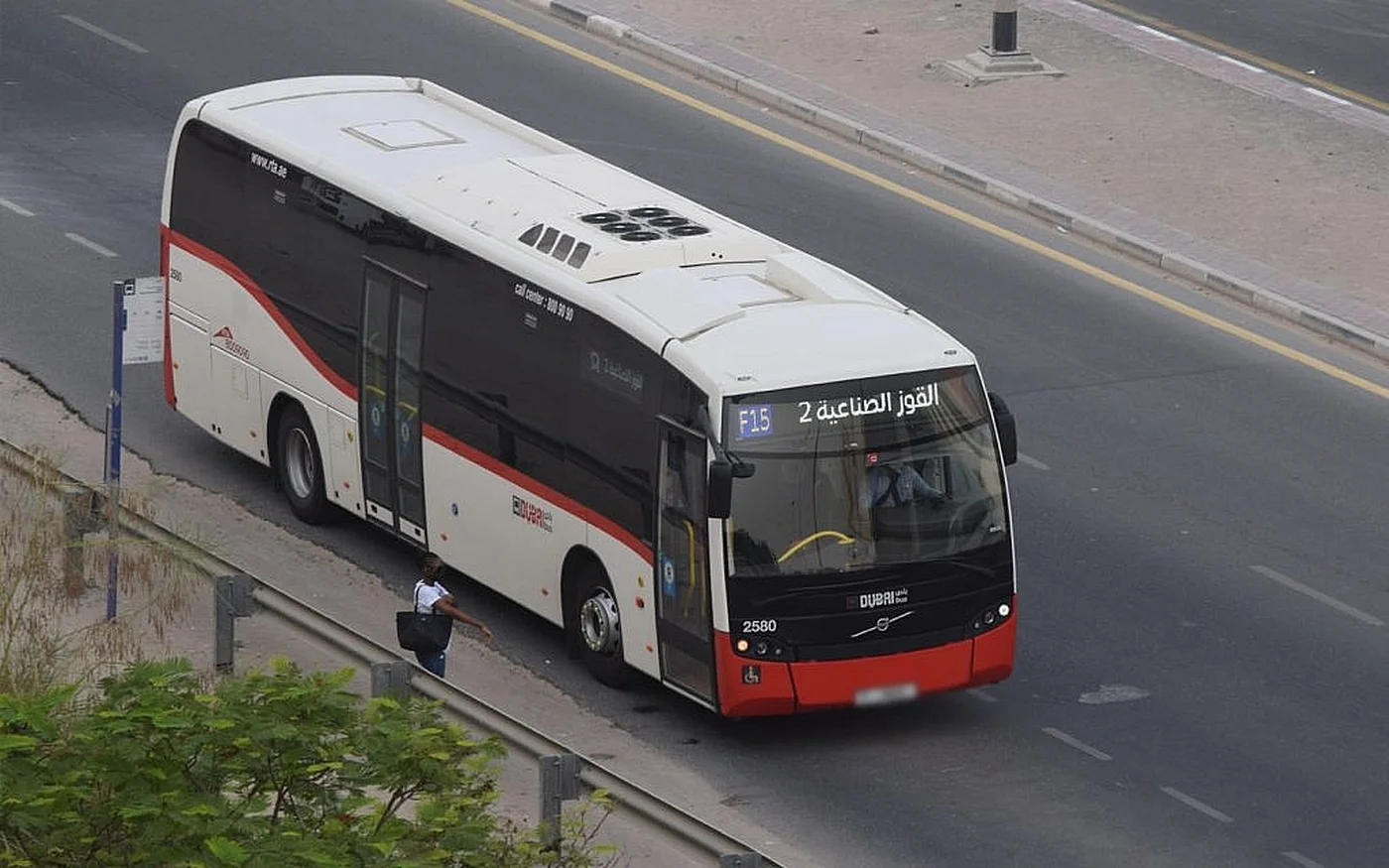
The closest bus shelter can be on the wrong side of the road for your trip. Two stops may share almost the same name, while a route that once stopped outside a mall might now end on a different street. Dubai’s buses are useful for trips that the Metro cannot cover on its own. To make the most of them, plan around the boarding stop, the direction and the walk from the last stop to your actual destination.
Start with the RTA website or S’hail, then check what to look for at street level. The service and payment information below was checked on 6 November 2026 and concerns ordinary local Dubai buses. Intercity, seasonal and other special services have separate route or fare information. RTA local bus service instructions.
Plan from the actual door or entrance
Enter your starting address and destination rather than a district name. For a hospital, use the entrance you need. For a large residential development, use the gate you can reach on foot. Give the planner a time and day. If you have to arrive by a particular time, check the connection that gets you there with room to walk from the stop. If you are planning the trip home at the same time, run the search in reverse. Return services may have different stop names or departure times.
A bus can be the main part of the journey or the link between a station and somewhere the train does not reach. RTA’s July 2026 route notice gives two examples. It announced Route 35 between International City and Dubai Silicon Oasis and Route 85 between Al Quoz’s Al Khail Gate and Dubai Internet City Metro station. A route joining two neighbourhoods may make sense without a train. A route ending at a Metro station can help you travel farther along the rail corridor. Use the current planner to confirm the stops and departure for the date you need. RTA July 2026 route notice.
Compare an all-bus journey with one involving a train. A direct bus may save an interchange, particularly if you start and finish near stops on the same route. A feeder and Metro combination may make better use of the rail section for a longer trip. The useful comparison is total walking, waiting and travel time. If one route saves five minutes on paper but depends on a short connection at a station you have never used, look up the next departure as well.
| What you see in the plan | What to check before leaving |
|---|---|
| Two stops with similar names | Open the boarding stop on the map and confirm its number and side of the road |
| A bus and Metro connection | Find the station entrance and bus bay, then check the transfer time |
| One departure late in the evening | Check the exact stop and date, including the last connection |
| A route you remember from an earlier visit | Check its current endpoint and any temporary diversion |
Match the stop, route number and direction
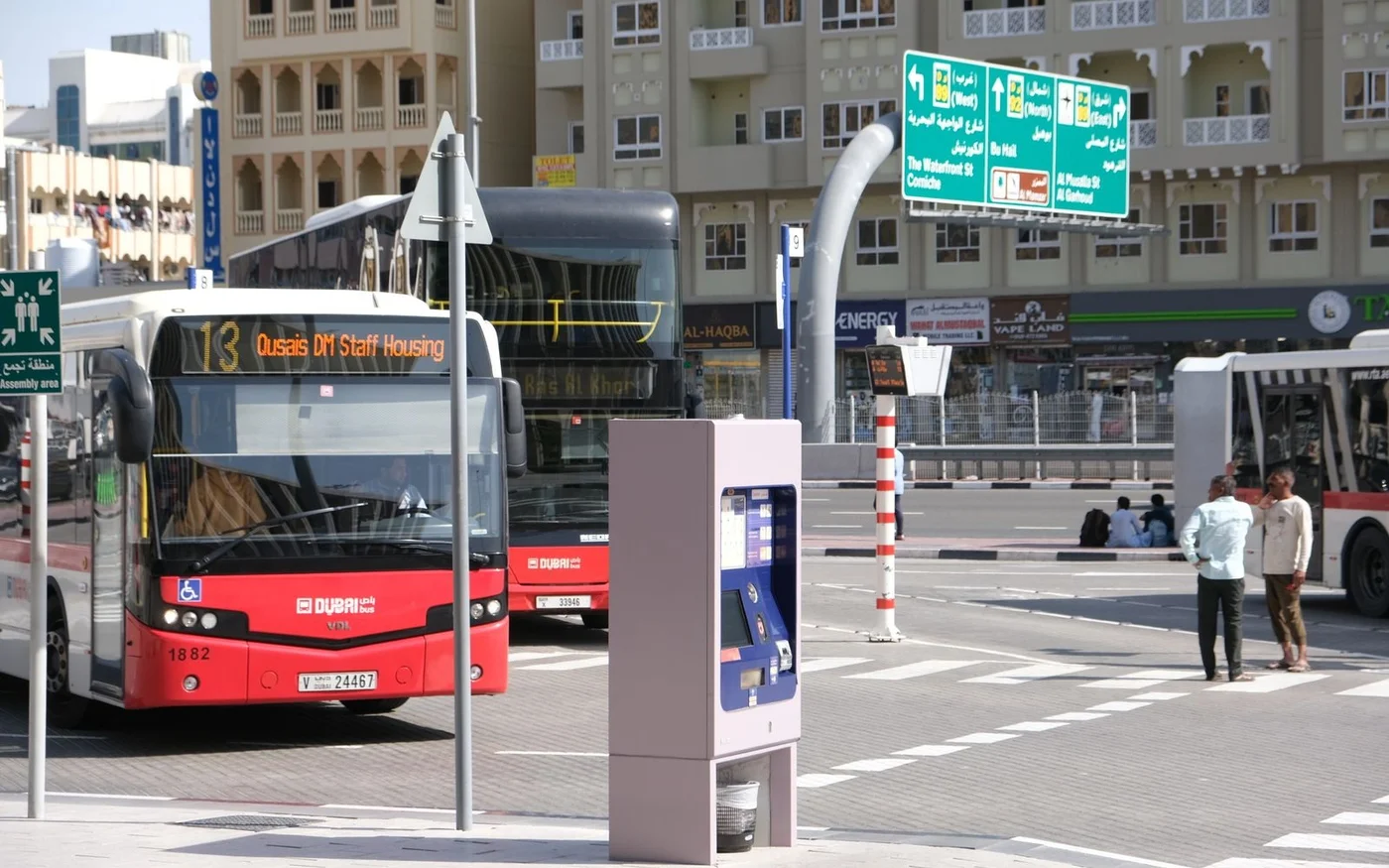
Open the stop detail in the planner and compare it with the sign when you arrive. A divided road or junction can have a stop for each direction. The one you want may need an underpass or signalised crossing to reach. At a bus station, follow the bay information rather than waiting where the first bus with a similar destination appears. Keep the route number and direction visible on your phone and compare them with the vehicle display.
RTA offers a stop-number SMS lookup as well as its website and S’hail. Its local bus instructions say to send the letter D or the word Depart with the bus stop number to 5223. For example, the format is D followed by the number printed on the sign. This is useful when you have reached a shelter and want to check departures for that stop. If several buses leave from there, match the route in the reply to your plan. A stop lookup answers what is due there. The full itinerary still needs the direction, the stop where you will get off and the walk beyond it.
A named endpoint can change while the route number stays familiar. The same July RTA notice says Route 84 was to terminate at InsuranceMarket Bus Stop (South Side) instead of Mall of the Emirates. This is the sort of change that can invalidate a plan based on memory. Check RTA service notices for altered stops, especially if you are going to a major event or travelling late. For seasonal buses, use the current season’s notice. RTA published a separate set of direct bus routes for the Global Village season beginning 14 October 2026. RTA Global Village seasonal route notice.
RTA’s July notice also lists a pair of services with different numbers for opposite directions. Route 37A was announced from International City to Dubai Silicon Oasis Lake, and 37B from the lake to International City. If you save the outbound number and search for it on your way back, you may miss the service shown under the other number. For a visit to the lake, save both directions separately. Write down which stop your return trip uses and check how to reach it from the place you will actually be leaving.
At larger stations, check the bay again when you arrive. The station board and the vehicle display can help you resolve a mismatch between the plan on your phone and the bus in front of you.
Pay at the reader when you get on and off
Have a valid fare medium before boarding. RTA’s local service page describes buying a ticket or nol card from available machines and offices and tapping on board. Its nol instructions give AED 7.50 as the minimum balance to have on a standard stored-value card before checking in. That is an entry requirement. The actual charge depends on the zones the journey covers. Do not assume an ordinary street stop will have somewhere to buy or reload a card. Check the balance before walking to the stop. RTA nol check-in and check-out instructions and RTA zone fares.
Use the same card to check in and out. Wait for the confirmation at each reader. RTA advises checking out to avoid being overcharged. As you approach the stop, get the card ready so you can complete the tap without holding up the exit. If the card is rejected, follow the reader prompts and ask for help if needed. A fare problem is easier to address when you still have the card and know the route, time and stop.
RTA also lists QR tickets for Dubai Bus, Metro and Tram. The digital version is available through nol Pay or S’hail. Select the ticket and zones or destination, and keep the app and internet connection available to scan the code for check-in and check-out. If you plan to use a paper ticket instead, check which machines issue it and whether it covers the bus itinerary. The bus guide and ticket service should be used together when checking a fare medium. RTA QR Ticket rules.
Make the transfer work in both directions
RTA’s fare rules describe a 30-minute window to check in to the next eligible transport leg after checking out of the previous one. They also set limits on the total journey duration and number of transfers. Use the same valid fare medium throughout. A qualifying transfer can be charged as part of one journey, with the fare reflecting the zones travelled. If you leave the station for an errand or wait too long for the next departure, the system may treat the following ride as another journey.
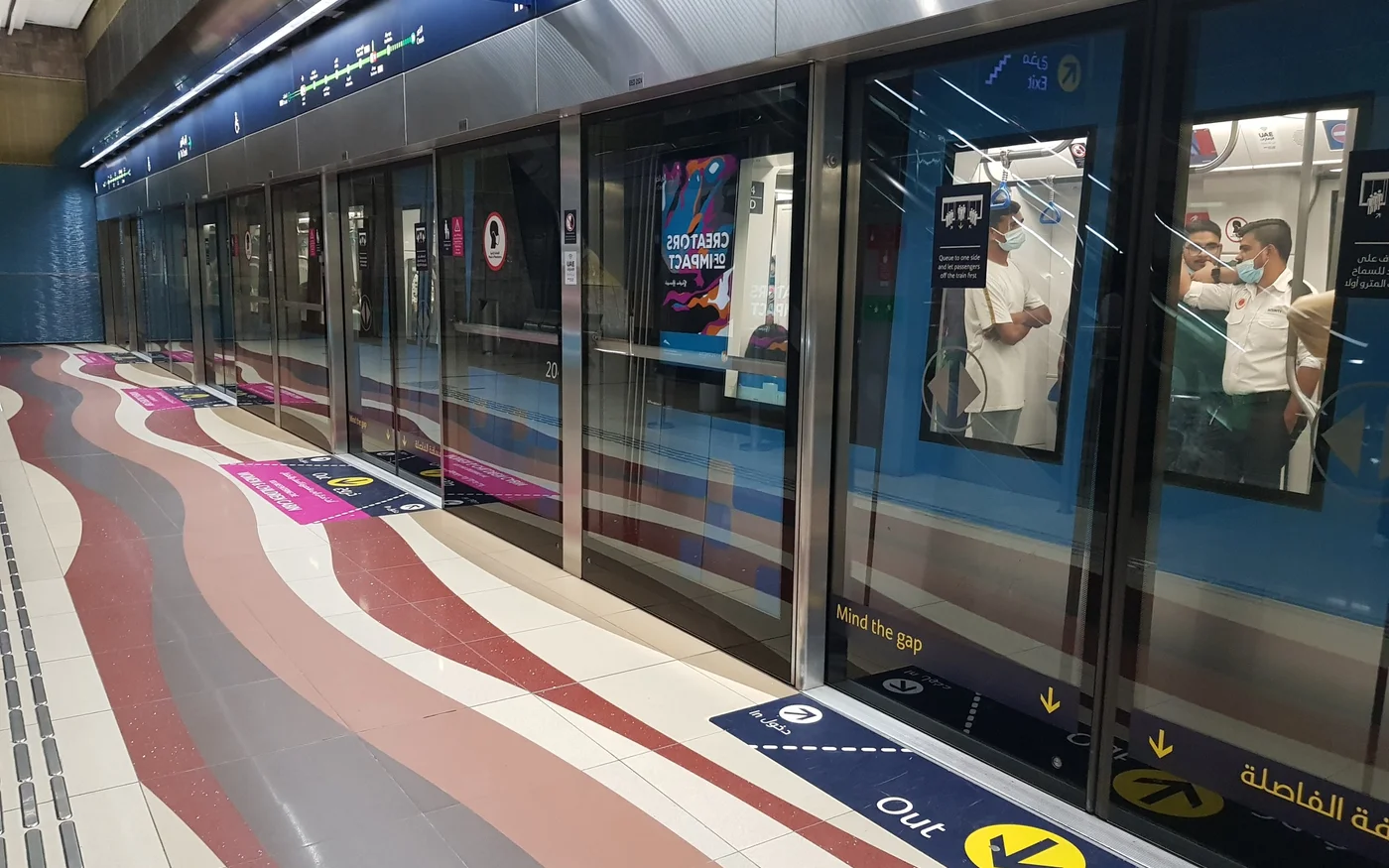
When changing from Metro to bus, find the exit that leads to the bus stop or station. A map marker beside the Metro does not necessarily show which exit to use. Allow time for stairs or lifts and any road crossing. A bus that appears to leave soon after the train arrives may be harder to reach from the platform than it looks. On the way back, check whether the bus stop serving the opposite direction is in the same area and whether it drops you near the correct station entrance.
For a bus-to-bus route, check how often the second service runs and what happens if the first is delayed. A wait at a station with several onward choices is different from a wait at a roadside shelter with one departure left. If the itinerary is important, identify where you could change to a different route or finish by taxi. Check the last planned bus from the exact stop. General bus station opening hours are a poor substitute for the route timetable. RTA timetable and special service guidance.
Board, signal your stop and check your exit
RTA asks passengers to stand clear of the stopping area and signal the bus. Wait until it stops and the doors open before boarding. RTA’s standard etiquette is to board through the front and alight from the rear, with an exception allowing women and children to leave from the front. Follow the vehicle and staff instructions. Use the stop bell when approaching the authorised stop, wait for the bus to come to a complete halt and check out before leaving. RTA Dubai Bus facilities and etiquette.
RTA describes dedicated wheelchair spaces on buses. If access is important to the trip, check the approach to the stop, the crossing and the surface where you will board or get off. The vehicle may have an accessible space while the surrounding walk is still difficult. RTA also prohibits bulky luggage on buses. If you have suitcases or equipment, confirm what the service can carry before setting out and keep permitted items clear of the aisle.
After getting off, check the direction of the final walk before crossing a large road. A stop that looks near your destination on the map may be separated from it by a junction or a fence. If you will make the trip regularly, note the stop number, the landmark that tells you to ring the bell and the return stop. Those details make the next journey easier to repeat even if you use a different departure.
Know when to look up a different bus product
A local Dubai bus and an intercity bus can both appear at a transport hub. RTA publishes intercity services separately, with their own destinations, fares and payment or booking information. Use that service’s rules if you are crossing to another emirate. Likewise, check the seasonal operator notice before treating a special service as an ordinary route. The route number and service description are better guides than the look of the bus or the name of the station. RTA intercity bus service.
For an ordinary trip, save the boarding stop, route direction, alighting stop and return departure. Check your fare medium before leaving and give the last connection as much attention as the first. That is what turns a line on the map into a route you can follow when you reach the street.
Comments (0)
No comments yet. Be the first!