
At an airport Metro station, the two decisions that matter first are which way you are going and what you will use to tap through the gate. At a Red Line platform farther into the city, there is a third question. Does the train go to the branch you need? Dubai Metro is straightforward once you know how its lines, terminal names and fare zones work together. This guide takes you from looking up a route to tapping out at the other end.
Start with the RTA station map and the exact name of the place you are going. Check the route and last departure for the time you want to travel, then decide whether to load a single trip on a nol Red Ticket or use a stored-value card. Check your balance before going through the gate if you are using a card. The network and fare information below was checked on 6 November 2026. RTA Metro and Tram map and RTA timetable.
Find your station before choosing a train
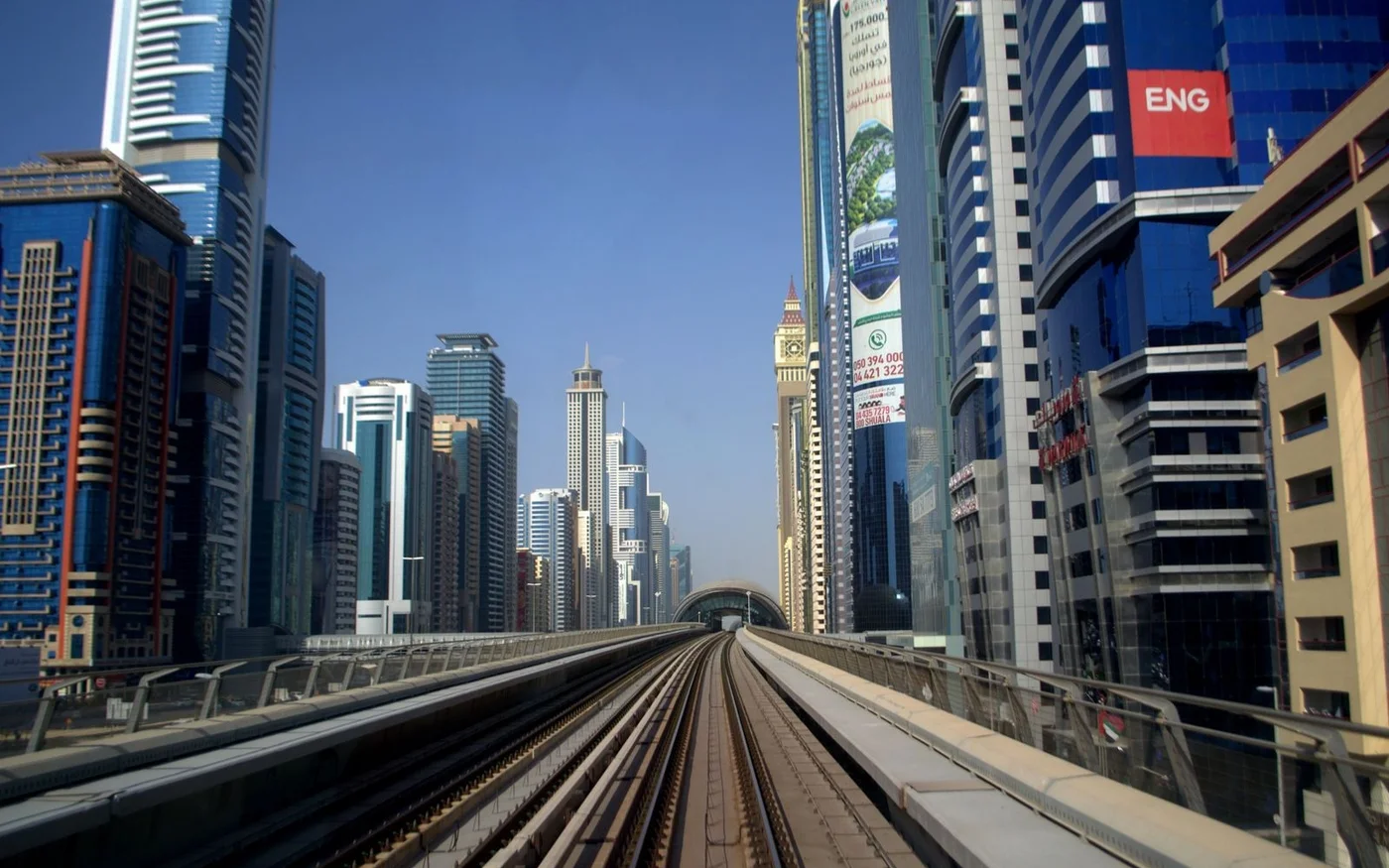
Dubai Metro has two operating lines, Red and Green. The Red Line connects the airport stations at DXB Terminals 1 and 3 with stops such as World Trade Centre, Burj Khalifa/Dubai Mall and Mall of the Emirates. Its regular service listing runs from Centrepoint towards Expo 2020 or Life Pharmacy. The Green Line runs from e& to Creek and serves stations including Al Ras and Al Ghubaiba. Union and BurJuman are the two places where you can change between Red and Green. The Blue Line appears in RTA’s project information, with completion scheduled for 2029. Plan present-day travel on the operating network. RTA Metro network and project information.
On the Red Line, the display at the platform is more useful than the line colour alone. If you want Expo 2020, look for a train that serves that branch. If you are heading to Ibn Battuta or Life Pharmacy, check for the Life Pharmacy branch. RTA introduced direct trains to both branches so passengers could board the appropriate service without changing at Jabal Ali. Its original explainer uses the name UAE Exchange, which RTA later renamed Life Pharmacy. Use the current map and station displays for names, and check every approaching train for its destination. RTA Red Line direct-train explainer and RTA Life Pharmacy station renaming notice.
For a journey between the two lines, choose the interchange the planner gives you and follow the signs to the next platform. Union and BurJuman both offer the connection, but your best choice depends on where you start and where you are going. When you leave the train, read the line colour and the direction signs together before joining a platform queue. If your itinerary connects with Dubai Tram instead, RTA lists the interchanges at the Metro stations identified by codes R36 and R37. Use the map to find the corresponding Tram stop and allow time to walk between the systems.
A station name can also hide part of the journey. The map gets you to Burj Khalifa/Dubai Mall station. Your full journey ends at the entrance, office or meeting point you need. Look up the walk from the station and the exit on the correct side of a main road. That small check is particularly useful when a building has entrances facing different streets or when you are carrying luggage. Compare the walk with any local bus or tram connection before choosing the fastest route on the map.
Use fare tiers to estimate what you’ll pay
RTA divides Dubai into seven public transport zones. The fare is based on the zones covered by the journey. Think in tiers rather than counting stops. RTA’s fare brochure describes the first tier as travel within one zone or a qualifying crossing into a second zone of less than 3 km. The second tier covers travel from one zone into a neighbouring zone at the standard adjacent-zone rate. The third covers three or more zones. Use the planner or fare information for your exact route, especially close to a zone boundary. RTA nol fare table and RTA Metro and Tram fare brochure.
| Fare tier | Silver card, regular cabin | Red Ticket, regular cabin |
|---|---|---|
| Tier 1 | AED 3 | AED 4 |
| Tier 2 | AED 5 | AED 6 |
| Tier 3 | AED 7.50 | AED 8.50 |
These are journey fares. On the first purchase of a Red Ticket, add the AED 2 ticket issue charge. RTA gives the example of a Tier 1 trip loaded on a new Red Ticket for AED 6 in total. A new Silver card costs AED 25, of which AED 19 is travel credit. That means the price paid for the card and the amount available to spend are different. If two passengers are travelling together, plan for each fare-paying passenger to have their own ticket or card for the gates.
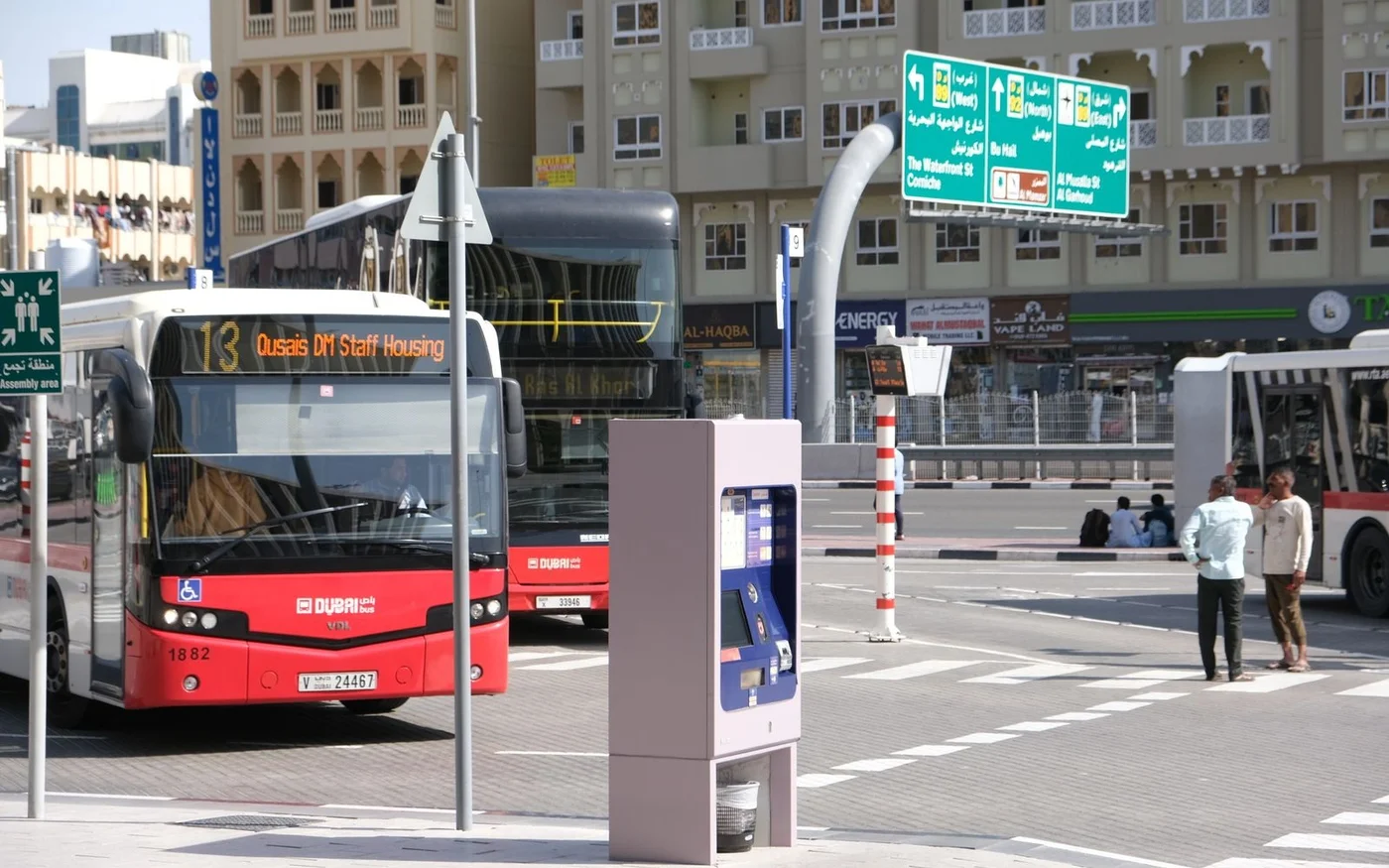
A bus or tram leg can be part of the same public transport journey when it meets RTA’s transfer conditions. The fare guide gives 30 minutes to check into the next mode after checking out of the previous one, with limits on total journey time and transfers. Use the same valid fare medium and tap at the relevant readers. If you intend to stop for lunch and continue later, budget for the possibility of a second journey. A short transfer between modes and a break in the trip can produce different charges even if the route on the map looks identical.
Choose between a Red Ticket and a Silver card
For an occasional Metro trip, a Red Ticket is a paper ticket loaded with a trip before you ride. RTA describes reloading it for up to ten trips and says the fare tier should match the tier initially purchased when reloading trips. If you bought one for a short ride and later want to cross the city, check with the ticket machine or staff before relying on it for a different tier. When buying at a station, have your destination ready so you can load the right fare. RTA ticket and nol services.
Silver is a stored-value card. That is useful if you expect several trips of different lengths, or need to use buses or trams during the same stay. You add money and the system deducts the applicable fare. Before entering the Metro, RTA directs riders to have at least AED 7.50 on a standard nol card. This entry balance can be higher than the fare for your intended ride. If an online top-up is still pending, use RTA’s instructions for activating it and allow time to check the available balance before trying the gates. RTA Metro service and balance rules.
The Gold option serves people who want to use a designated Gold Class cabin and pay the applicable premium. Read the signs on the platform and the train before boarding. A regular Silver fare covers the regular cabin. Women and children also have a designated cabin, which is separately marked. If you travel as a mixed group and want to stay together, agree where to board while you are still on the platform.
Personal nol cards and travel passes serve other needs. If you expect to repeat the same commute, check which zones it crosses and how often you will actually ride before comparing passes. If you qualify for a concession, check the eligibility and card requirements on RTA’s service page. The ordinary fares above are useful as a baseline for a trip. The right longer-term option depends on the journeys you make over the whole period.
Check the last departure and the airport terminal
RTA lists regular Metro station opening hours as 5 am to midnight Monday to Thursday, 5 am to 1 am the following day on Friday, 5 am to midnight on Saturday and 8 am to midnight on Sunday. These are station opening hours. Use the timetable or journey planner for your last train from a particular station in a particular direction. Check temporary changes for holidays and special events. A late journey that changes lines has two departures to check, and the second one may determine whether the route is feasible.
At Dubai International Airport, the Red Line serves Terminals 1 and 3 directly. Read the terminal number on your flight information before you plan either direction of travel. Terminal 2 does not have the same direct Metro access. Use the airport’s transport information for another connection if your flight uses that terminal or your train has finished for the night. Allow time after arrival for immigration, collecting bags and reaching the station, especially if you are trying to catch one of the last trains. Dubai Airports Metro connections and Dubai’s airport transport overview.
RTA permits two suitcases per passenger, one up to 81 × 58 × 30 cm and one up to 55 × 38 × 20 cm. Use the designated luggage area onboard. If you have bulky bags, measure them before choosing the Metro, and allow time to reach the platform by lift. RTA describes lift access to station levels and dedicated spaces for wheelchair users on trains. When the journey depends on step-free access, consider the walk and crossings outside the station as well as the lifts and boarding arrangements inside it.
Decide whether the Metro covers enough of the trip
Compare door-to-door time. A direct train can be the easier option when your destination has a convenient exit. A journey with a line change and a long outdoor walk can take more time than the train segment suggests. If you have a fixed arrival time, look up an earlier departure and check whether the route still works with the train after it. If the trip starts at the airport, check both the time you are likely to reach the station and the connection you will need after leaving the Metro. That gives you a better basis for deciding when to take a bus or taxi for part of the journey.
At the gate, on the platform and after the ride
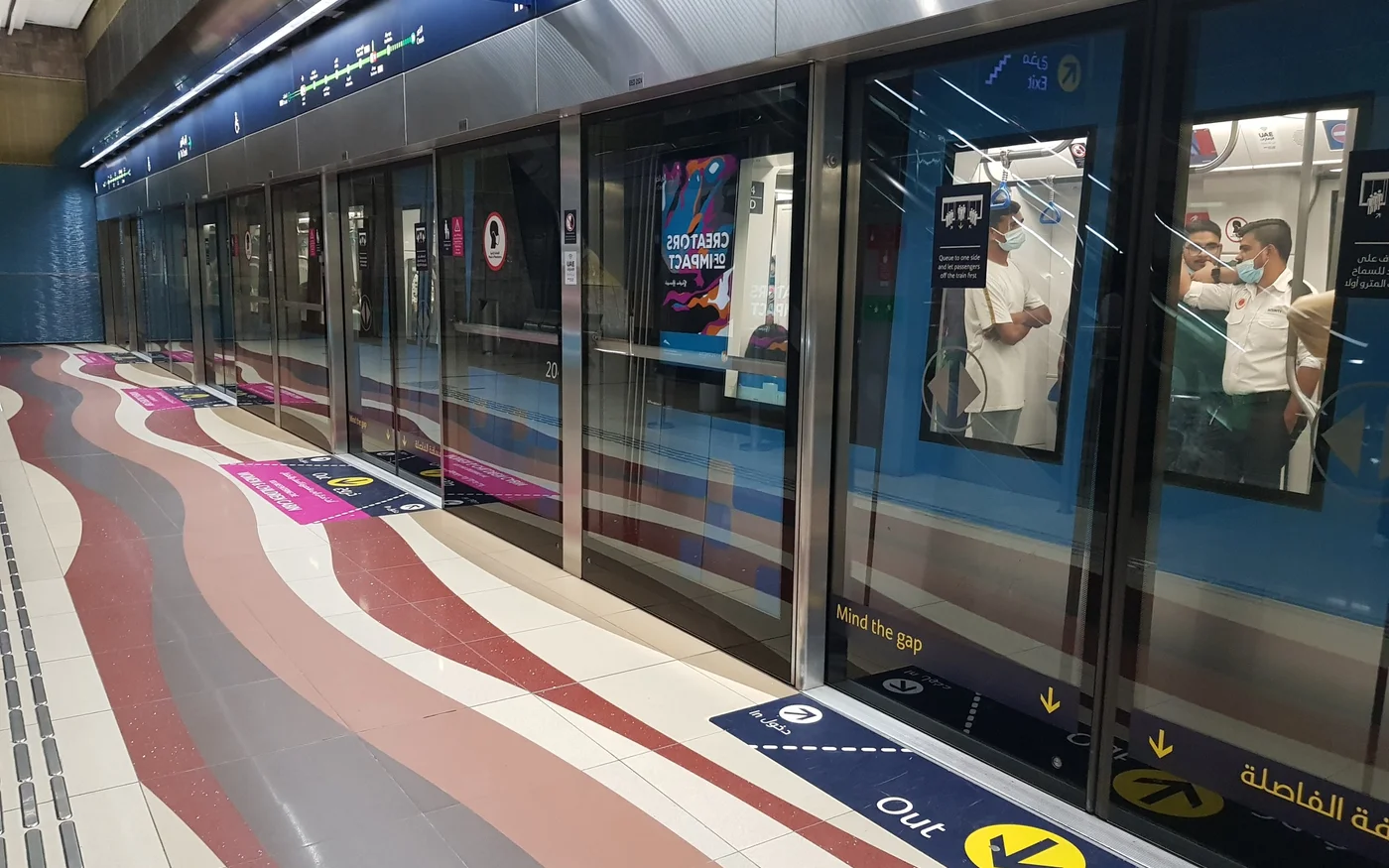
Tap in with the fare medium you intend to use, wait for the gate to accept it and keep it accessible for the exit. If it is declined, check the balance or ticket with staff before proceeding. On the platform, read the destination, let people off first and make room around the doors. Look for the correct cabin marker if you are using Gold Class or the designated women and children’s section. RTA prohibits eating and drinking onboard, so finish refreshments before boarding.
Tap out at the destination. If the next leg is a transfer, head to its stop and use the same fare medium to check in within the allowed window. If you are meeting someone, send them the station exit or the street-level meeting point. An interchange station can have several entrances, and two people can both be waiting at the right station on different sides of the road.
For a first trip, make the route easy to check at a glance. Save the station names, the line or branch, the interchange if there is one and the destination exit. Put your return journey in the planner while you still have time to change it. Once you know where you will board, what you will tap and which train you need, the rest is following the signs one decision at a time.
Comments (0)
No comments yet. Be the first!