

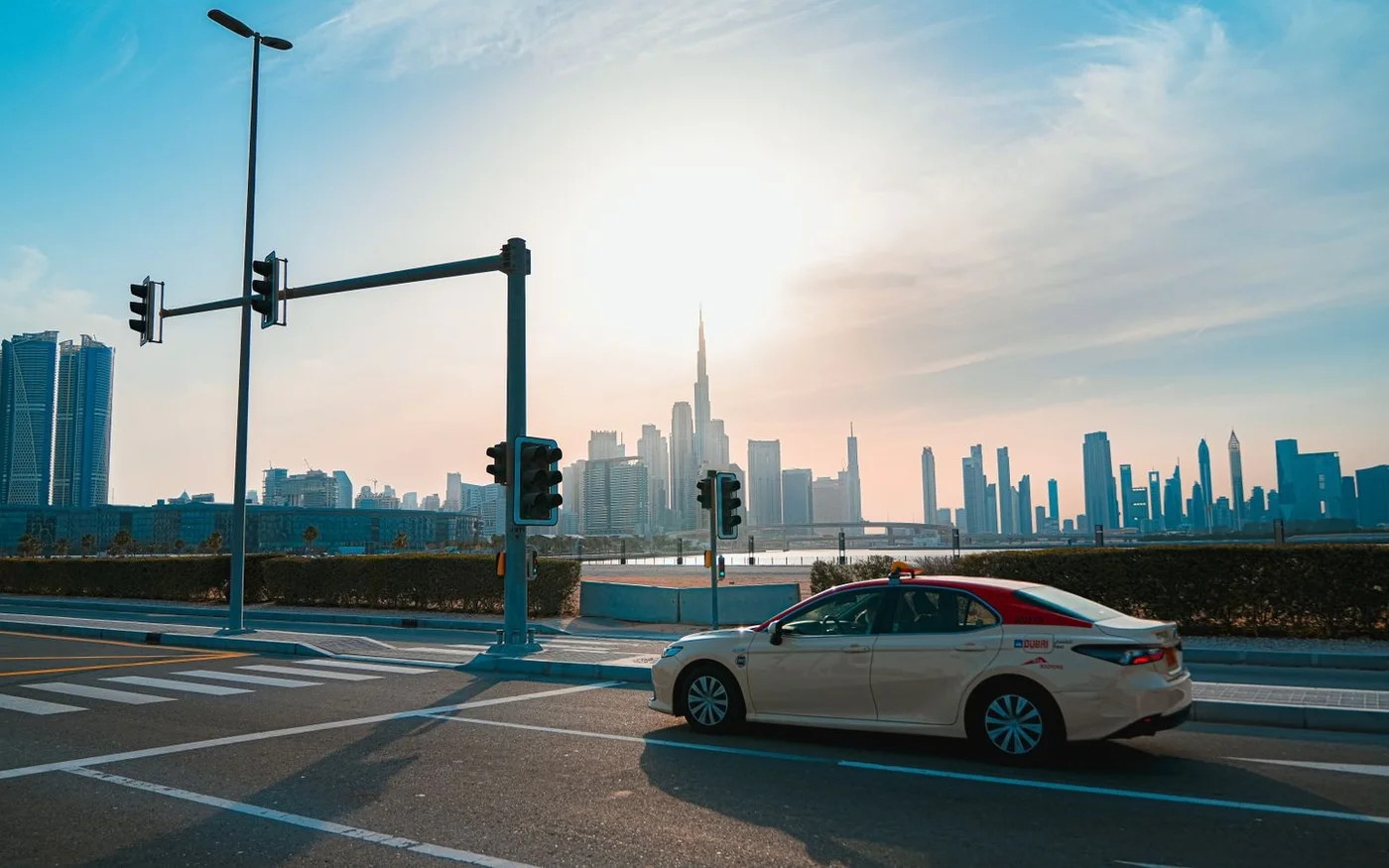
A Dubai taxi can look much the same whether you wave it down on the street or request it through an app. The way you get the car can still change the starting fare and minimum charge. Airport pickups use their own tariff, and a car booked through an app can meet you at a different part of the terminal from the official taxi rank. Before comparing prices, check which service you are looking at and where it will pick you up.
This guide covers regular metered taxis, Hala bookings and the airport taxi rank, with separate notes on larger and accessible vehicles. Published information was checked on 6 November 2026. Check the live booking screen or ask the rank attendant when the vehicle type or price matters to your trip. RTA taxi starting fares.
| How you get the taxi | Published starting fare | What to check |
|---|---|---|
| Regular road pickup | AED 5 from 6 am to 10 pm, AED 5.50 overnight | RTA lists an AED 12 minimum for ordinary road pickup |
| Regular metered taxi booked through an authorised app | RTA lists AED 9, 10 or 13 depending on day and time | Ordinary e-hail minimum AED 13. Check the selected product and any peak charge before confirming |
| Dubai airport rank | RTA fare table lists AED 20 for a normal taxi and AED 25 for a van | Dubai Airports and RTA’s airport service page publish an AED 25 starting figure. Confirm at the rank for the vehicle offered |
Choose between a rank, a street pickup and an app
A road pickup works when an available licensed taxi can stop where you are. RTA directs passengers to designated areas and parking lots. A rank can be easier to find outside a hotel or transport terminal. If you are leaving a busy building, check where vehicles are allowed to stop before walking to the kerb. For a trip you need at a particular time, an app gives you a way to confirm the pickup point and see the assigned car. RTA taxi service and pickup options.
Hala is a metered taxi product you can select in Careem. The app also offers other ride categories. Read the name of the product before comparing two estimates. A larger car, child-seat option or premium category can have different terms. Dubai Taxi Company also makes taxis available through Bolt. It describes its Bolt integration separately from its partnership with Hala. The October 2026 Hala renewal with DTC and National Taxi expressly excludes their airport fleet from the taxis it covers. An app booking and joining the airport rank therefore remain separate choices. Careem’s Hala product page, DTC digital mobility report and DTC’s October 2026 Hala agreement announcement.
When booking, place the pickup pin where the car can reach you. A tower can have separate hotel, residence and office entrances, and a mall may direct app drivers to a particular door. Save the name of the pickup point in case you have to find it on signs. If you have several passengers or large luggage, choose a category with enough space and confirm it can take everyone and their bags. The distance estimate tells you little about whether the group will fit.
Read the meter and app estimate as separate pieces of information
The starting fare is the amount the meter begins with. The minimum is the floor RTA gives for the trip in the relevant category. A short road pickup can start at AED 5 and still be subject to an AED 12 minimum. RTA’s published calculation also includes kilometres travelled, chargeable waiting and any applicable fees or tolls. Read the fare structure before estimating a short ride from the opening number alone.
RTA lists AED 9, AED 10 and AED 13 in its authorised e-hail starting schedule for regular and family taxis. The time windows differ between weekdays, Friday and the weekend. Hala describes its own ordinary taxi starting figures as AED 9 off peak, AED 10 at night and AED 13 during peak hours. It also describes dynamic peak pricing in certain locations and says the app displays a peak factor before confirmation when it applies. Those are different pieces of the price. Check which category and time band the booking shows, then read any demand-related notice in the same screen. Hala’s fare breakdown and Hala’s peak fare explanation.
Distance and waiting charges can matter more than the opening amount on a longer trip. Hala’s fare page lists AED 2.51 per kilometre and AED 0.50 per minute for its waiting component. RTA’s airport service page lists AED 2.23 per kilometre for its standard taxi category, while DTC’s airport and specialist pages have their own tariff descriptions. Keep the quoted rate with its source and service. Applying the Hala distance rate to an airport rank trip would mix categories. RTA airport taxi service and published charges.
RTA also lists charges that can apply to a route, including Salik and fees associated with certain destinations or crossings. Hala expressly says Salik is excluded from the estimate shown before booking and is added if the taxi crosses a toll gate. If you want to avoid toll roads, discuss the route before the trip. A toll-free route can add time or distance. For a trip that crosses an emirate boundary, check which charges apply to the route you will actually take. Do not assume the price of a previous journey with a different route or starting point will repeat.
At DXB or DWC, choose the rank or app pickup before going outside
Dubai Airports directs passengers at DXB to designated ranks at the terminals and describes DTC taxis as available around the clock. Follow the taxi signs from arrivals, or ask a Guest Experience Ambassador if you need help finding the rank. DWC is a separate airport and has its own taxi pickup. Check the airport code on your booking before arranging a car, especially if someone else will collect you. Dubai Airports DXB taxi information and Dubai Airports DWC taxi information.
There is a meaningful difference between official pages on the starting price. RTA’s fare table specifies AED 20 for a normal airport taxi and AED 25 for a van. Dubai Airports gives AED 25 as a general airport starting fare, as does the RTA airport service page. The vehicle-specific table is the clearest distinction the authority publishes, but the service pages do not fully reconcile the figures. Ask the rank attendant what tariff applies to the car you are offered and check the opening amount. Either starting fare is only the first part of the journey price.
If you book a ride through an app after landing, use the pickup instructions for your terminal and category. The arrivals taxi queue and an app meeting point may be in different places. Collect your bags before ordering if you need time to move to the pickup area. Match the vehicle and plate to the app. For a hotel, give the full address and identify the entrance if the property has more than one. Confirm the airport and terminal again when making the reverse journey. The street or app tariff for the ride to departures should be checked separately from the tariff for a pickup at an airport rank.
Ask for the vehicle you need before relying on a booking
For a wheelchair-accessible ride, Dubai Taxi Company describes vehicles with or without a wheelchair lift, depending on what the passenger requests. Its service page lists advance booking through its contact channels and an airport rank process in which the controller allocates a vehicle. Tell the operator whether you need a lift and what mobility equipment you will bring. DTC lists a discount for holders of a valid Sanad card on its dedicated service. Check eligibility and the fare for the specific pickup rather than assuming the discount applies to every app category. DTC accessible taxi service.
A group with a stroller, several suitcases or an item that needs more space should make the same check early. At the airport, tell the rank staff how many people and bags you have before accepting the vehicle. In an app, read the category description and check any requirements for equipment such as a child seat. If one vehicle cannot meet the request, allow time to wait for another suitable car or to book a second vehicle.
Compare the right price for three common journeys
For a short ride from an office to a nearby station, compare the ordinary minimums. If the taxi can stop where you are, an AED 5 opening figure and an AED 12 minimum describe different parts of the same road tariff. An ordinary e-hail trip has a published AED 13 minimum. On a short route, the minimum can matter more than the difference in opening amounts. The app may still be useful if it can collect you from a specific entrance or if there is nowhere convenient to hail a car.
For a journey across town at a busy time, compare estimates using the same pickup and drop-off. A pickup pin on the wrong side of a divided road can change where the driver turns and which roads the app recommends. Check whether the estimate includes any peak factor and whether tolls are added separately. If two apps show different amounts, check that both offer the same type of taxi before deciding which estimate is lower. Record the amount shown when you confirm if you want to compare it with the final receipt.
For an airport arrival with a group, confirm the vehicle first. The starting amount for a van can differ from the standard taxi figure, and the difference between two cars and one suitable van is larger than the difference between two opening fares. Ask the rank controller whether there is a vehicle that fits the group and luggage. If you decide to book instead, compare the actual pickup instructions and the fare for that vehicle class.
Keep the trip details until you have checked the charge
At the end of the ride, check the amount against the meter or app record and keep the receipt until any card payment has settled. If a price changed, look for the route, waiting or toll components before contacting the provider. For an item left in a taxi, DTC asks riders to share trip details through its support channels or RTA. The pickup time, route and vehicle information can help identify the trip. An app booking will usually give you a record to refer to. For a rank or street pickup, keep the receipt or vehicle details. DTC airport service and lost property contacts.
The most useful comparison is between the options you can actually use at your pickup point. A metered street taxi may be convenient when one can stop nearby. An app is useful when you need a specific meeting point or vehicle. At the airport, the rank offers a direct route from arrivals. In each case, the vehicle type, distance, traffic and route fees explain more about what you will pay than the starting figure alone.

Comments (0)
No comments yet. Be the first!